Sunday, June 26, 2016

TV Review - Orange is the New Black Season Four (2016)


Orange is the New Black is one of the flagship shows for Netflix. Along with House of Cards, it's one of the shows that put Netflix on the map for original programming. Also much like House of Cards, Season 3 seemed to have more low points than high points in term of storytelling. Luckily, both shows seemed to have listened to critical response and have pulled in the reins for both shows, making Season 4 of both shows a high point for the respective series.

Orange is the New Black has been an interesting show for me. The premise has kept me hooked since the first episode, but the stories the show chooses to tell have kept me coming back for more. You can tell a lot of interesting stories based on the idea that the location stays the same but the population and situations change, and their is such a variety of people coming through that really you can tell any mix of stories you want that also deal with prison. That's where OitNB really shined through, with their flashback segments, showing you snippets of the different inmates lives before prison, often showing you who they were and what happened to get them into prison. It not only brought depth you otherwise couldn't get for such a robust cast, it also helped flesh out the run-time of each episode, which is crucial in a show where we are working on a limited time frame and stuck in one place.

I think as the show went on past season one, they realized something important about the show, that nearly every other character is more interesting than our main character. The first season works well for Piper, it show cases who she is and what she does and why she was in prison, and how crazy and scary that is for someone like her, who otherwise led a pretty cushy life. But after that...you know who she is, her character is pretty much spent. Using the flashbacks and bringing other storylines to the fore-front, Piper started to become just another part of the ensemble cast and not the main character, which was great because there are so many other interesting people to be following other than Piper. However, into the third season they seemed to be at an odds, where they wanted both for Piper to be the main driving force of the show and also to focus on the other characters. For that, the season ended up lacking. Tackling terrific and horrifying situations and topics and then cutting back to Piper whose ultra-seriousness about her situation undercuts how much serious stuff we're being shown otherwise. A lot of people didn't like how season three ended, I was not in that camp, but I understood the complaints and took it for what it was.

So now we get into Season 4, and it is a wild ride. The very first episode of the season shows you the impact of the Season 3 finale as anything but idyllic and saccharine. The end of season 3 was leading up to what would look like a win for the inmates, which, just writing that out indicates why that can't happen. Our main characters are in prison and they are not going to have a good time. So Season 4 starts off with a bang and things immediately get worse for literally everyone.

One thing I really liked about this season was the expansion into following the guards and Caputo and how the prison affects them as well. You end up feeling bad for the older guards and Caputo, as they struggle with losing their own humanity in the face of the job. Especially Caputo. He was never shown as a particularly good dude throughout the previous seasons, but we were shown that he cares about the inmates and sees them as people. Throughout this season he is challenged nearly every episode with the idea that the company he now works for treats the inmates as a bottom line and not as people. You see him spiral further and further, until he realizes he is at the mercy of this company and he's more just a figurehead than really in power, that he just has to sit and watch humanity being stripped away from his prison and people he's gotten to know. I think Caputo's arc is actually one of the most compelling of the show, someone who was once a sub-villain of the show gets a transition into being a good guy, and it's literally only because in comparison he's a pretty decent guy when you bring in worse people.

I think Season 4 is a great improvement on the last couple seasons. While they still seem to insist on Piper being our main character, I like that they took her down a bunch of pegs in the process. I still was unhappy with how much we're supposed to sympathize with her for some of her decisions this season, but several times I was stuck in a mindset of "she gets what she deserves." The entire premise of this season seems to be that actions lead to consequences, and if you choose the action you don't get to choose the consequence, and Piper's arc this season seems to at times forget that part and want us to feel bad for her. I mean, some bad shit happens to Piper, but what she did was not going to go without consequences and we're supposed to believe that's kind of the point of the show. Other than that though, the story arcs this season were fantastic. Everything with the new guards and new captain, CO Donuts getting a small character arc of his own and all the inmate stories, especially Lolly, Crazy Eyes and Blanca.

Another thing I really appreciated this season were the flashbacks. By Season 3, it felt a little like the flashbacks had kind of taken over for new content in the show, as a way to get you to care about any character. I enjoyed it, but it seemed like we were getting the setup for every character as we went. This season, the flashbacks were mostly just for fleshing out character backgrounds and not why the inmates were in prison (except for a couple in particular) and just showing us more about them and why they act the way they do and what their old lives were like. The thing I really liked this season though was how they handled what I will refer to as the "Walking Dead" situation. And by that I mean, much like in The Walking Dead property, it's an ensemble show about normal people being put into extraordinary, impossible situations. A situation like the zombie apocalypse or prison can't be escaped in the narrative of the show, that part can never change. So you have to rely on good storytelling and the ability to add and remove characters at times that you both see coming and don't see coming. The hang up that The Walking Dead seems to have is that they want to remove people in a shocking manner often, to keep people on their toes, but it's mostly without a good reason. Characters that have been smart their entire run will be dumb for an episode and die in that one because they were dumb. It stops being shocking in the benefit of the show, and instead feels like an exercise in drumming up ratings. Orange is the New Black handles that same kind of impossible scenario well this season. We lose one character that we saw coming the whole time, and that story arc gets to play out through the season, and we get a shocking death as well that you would never suspect to have happened. But unlike The Walking Dead, it's not completely out of character for the death to happen, they make the death happen in a way that's totally plausible, not out character for the way the person acted, and still end with a shocking death that no one would have saw prior to that scene, and for that I must commend them. Unlike The Walking Dead, you truly do not know who is safe and for how long inside Litchfield.

As strong as it was story wise, there were still some characters and stories I didn't enjoy that much. I mentioned the problems with Piper's story, and almost up there for me is the second half of Alex's story. It starts off strong, but then once the main problem is taken care of, they just put Alex back to being this mopey, stand-offish character that ends up being nearly insufferable. It would be one thing if they actually focused on her for something, but the show never does. It's just that Alex has her own problems that she's dealing with somewhere in the background of every other episode, so you never get much more than just some moping and brooding instead of any resolution with her.

Overall, I really liked where the show ended. It resolved several storylines, shocked with the way it handled the death of certain characters, and left it on a reasonable cliffhanger for the next season. The creative team pulled in the reins and worked on what made the show spark in the first place and tweaked parts that didn't work. If you liked the previous seasons, I cannot recommend season 4 highly enough.

Friday, June 10, 2016

TV Review - Jessica Jones Season One (2015)

I was set up to love Jessica Jones, Netflix's second foray into the Marvel Universe. A private detective who has a noir-like bleak outlook on life who also happens to have superpowers. That premise alone set the show up for it to be an instant hit for me, and it totally was.

As part of Netflix's own Marvel Universe plans, Jessica Jones is show number two to come out, and it's every bit if not better than Daredevil. My knowledge of Marvel comics past the Avengers tiered heroes is tenuous at best, so I went in knowing nothing about either Daredevil or Jessica Jones, and I feel like I understand the characters now more than ever. At least in these incarnations I do. While I at least knew some stuff about Daredevil, I really knew nothing about Jessica Jones, her supporting cast, her villains or even her powers. While Season 1 of Daredevil (and later Season 2) made me believe Marvel could do true-to-life representations of their characters through Netflix, Jessica Jones made me believe Netflix should be the place to do all their characters.

The setup to this first season of Jessica Jones was pretty simple. Jones, played by Krysten Ritter is a New York private detective, working in the slums of Hell's Kitchen. The twist? She has superhuman strength and flight-like jumping abilities. It also just so happens that her life has been a living hell. We start the series with a small amount of P.I. work, but it mostly revolves around tracking down Kilgrave. Kilgrave, played by Doctor Who's David Tennant, is a man who has what I would ultimate power of suggestion, but the show calls it mind control. Essentially, anything he says as a command to someone, they must do. Their body will not let them stop until they think they've done the task he has commanded. Often leading to torturous, brutal results.

Kilgrave's power might be the most fascinating real-world application of a comic superpower I have ever seen. So many people, myself included, have wished we had the power to compell people to do things just by telling them to do so, usually just for the fun of the situation. But Jessica Jones takes that idea of wish fulfillment to a whole 'nother level, as it rounds out that idea with the notions that A, actions have consequences, and B, that the person who wields that power could be a psychopath. It's an evil form of the Jedi Mind Trick. You get to see the fun side of the power as Kilgrave uses it a couple times to have a guy give him a cool jacket right off his back, and able to get around police in a hostage situation to save the day simply by telling the bad guy to stop. But then you get the nasty, brutality of the power. Women being compelled to not move off a bed or leave a room for days at a time, being raped because he tells them they want it, forcing people to brutally injure or kill themselves just because he said so.

It's absolutely fascinating to me, and is what makes Jessica Jones Season One better than Daredevil Season One for me. As much as I enjoyed Daredevil, a lot of his show is wrapped around his personal conflict of what it means to be a hero and why as well as stopping comic book-y plots of violence, that are entertaining, but feel less grounded in reality. While you enjoy the ride and want Daredevil to win, stopping Kilgrave feels imperative, because a monster who has the power to tell people to do whatever he wants them to do affects everyone he comes near.

The only real disappointment I had with Jessica Jones was knowing that the entire season was going to be spend dealing with Kilgrave, because they set Jessica Jones up to be a series about a super-powered alcoholic New York private eye, and that's a show I want to see. I understood why they had to do it, I just wrote it myself, you can't let Kilgrave roam free because he is just too powerful. And much like Season Two of Daredevil, which addressed some of my story issues with the first season (being essentially one plot for a tv season) I assume Season Two of Jessica Jones will do the same. It really wouldn't even be that much of a disappointment if I had more Jessica Jones to watch, as it's a time sensitive criticism. I just want to see more of that world now that the impending threat is out of the way.

Jessica Jones was brought to screen by a woman and three of the main characters are women and it feels fantastic to see the Marvel brand get that kind of expansion because it has been severely lacking in the rest of Marvel's live action universe. Jessica Jones feels like a real person, Patricia Walker feels like a real person and so does Jeri Hogarth, Jones' go-to lawyer. They are all out there doing their own thing being characters who progress the plot, and that makes me so happy. Everyone gives a great performance, especially Carrie-Anne Moss as a razor-sharp defense lawyer, and David Tennant as Kilgrave, both being as charismatic and endearing as characters as they were evil and conniving. Seeing the introduction of Luke Cage as Jones' lover and bartender was fantastic, and the story was compelling through and through. I couldn't be happier than I finally sat down to watch this masterpiece of television.

Sunday, May 22, 2016

Movie Review - The Nice Guys (2016)


I had been itching to see The Nice Guys since I saw the trailer in front of The Hateful Eight, so at 5 months, it's been a long time coming. While I've been aware of Writer/Director Shane Black for a long time, having written 80's Action Comedy staples Lethal Weapon, The Last Boy Scout and Last Action Hero, I really came to know him for his directorial debut, Kiss Kiss Bang Bang, a movie I absolutely adore. Kiss Kiss Bang Bang really pulled back the curtain on Black as a creative mind, showing us a lot of what he likes to write and direct, which amounts to Noir-styled buddy-cop detective movies with a dark and irreverent sense of humor. He followed it up with an entry into the Marvel universe, Iron Man 3, a film that Disney-fy's Black's sensibilities, but keeps them true at the core of the film. With The Nice Guys, Black has put out another foray into the Noir-styled buddy-cop detective movie with a streak of irreverent humor, this time with the style twist of it being set in the late 70's in L.A.

So without mincing words, I totally loved this movie. I'm sure some people will find flaws with it, but as a creative entity, Shane Black is a man who I share many similarities with. I'm inherently drawn to what this guy likes to make. The Nice Guys does an excellent job of matching and inter-playing beats. What I mean by that is that generally the action and comedy go very well hand in hand, without overpowering each other, as well as putting comedy in the action scenes, and putting action in the comedic scenes. You never go too long in the movie without getting an action beat or a comedy beat without getting the other, which really helps keep you invested.

Crowe and Gosling do a great job and have fantastic chemistry together, and both of them play common trope detectives that you would find in a typical Noir. I think a special shout-out has to go to Angourie Rice, who plays Gosling's daughter. She does an excellent job of not only acting her age, but also acting like someone stuck in the situation she is in. She doesn't steal the show, I think Gosling is doing that throughout the movie, but she keeps up with adults and has fun interplay with both of them.

I think the only real gripe I had with the film is that it runs a little long, clocking in at just under two hours. It feels like our detectives start just two-threads too far behind where they need to go, meaning I think they have to connect just one or two clues too many to piece everything together. This means that when it comes time to wrap-up the movie, they still have a couple things they have to tie up before the story can resolve itself. Like I said before, I absolutely loved the movie and it is incredibly watchable, but if they had just somehow got the jump on the first couple clues and cut the run time by about 15 minutes it would have been just the amount of tightness needed to take this from a good movie to a great movie.

The Nice Guys is a movie I will buy when it comes out, and I would turn on whenever I'm not sure what to watch when I don't know what else to watch. Not every movie has to be Citizen Kane, but it doesn't have to be mindless drivel either. The Nice Guys is a movie that is an excellent exercise in genre work that delivers a fun and interesting story with characters you just want to spend time watching, which is why I really hope this movie ends up doing well enough to warrant a sequel. I would be there on opening night for a sequel, that's for damn sure.


Check out the trailer below, and if that seems like a fun time, that's because it is. Go see it.

Friday, May 13, 2016

Backlog Burnout Review of Lost Odyssey: Making Memories

Title: Lost Odyssey
System(s): Xbox 360
Release Year(s): 2008
Rating: Teen
Current Amazon Price: $88.88 (New) $13.75 (Used Like New)


The Skinny:

A beautiful return to form for Hironobu Sakaguchi and Mistwalker studios, Lost Odyssey is a shining testament to the power of a well told story and old school JRPG mechanics. Its gripping story, solid gameplay, immaculate presentation, and wonderful characters make this one Xbox 360 exclusive that should not be missed.

The Meat:

Has a video game ever made you cry? That may sound like a silly question to some, but those people have obviously never played Lost Odyssey. This game tells a tale of love, loss, and the pain of memory that will make you feel feels that you didn't even know you had. The mastermind behind this work, Hironobu Sakaguchi, is a name you're seen mentioned in my reviews before. He was the visionary behind the Final Fantasy series, and after his departure from Square Enix following Final Fantasy X, he formed his own game studio called Mistwalker. After their disappointing first outing called Blue Dragon, which was a formulaic, bland RPG with little to offer, I was worried that Sakaguchi had lost his touch and that Mistwalker was going to fade into obscurity. However, this game assuaged all my doubts and reminded me why I'm a Sakaguchi fanboy. Lost Odyssey is the tale of one Kaim Argonar, a man who cannot die. It is a tale about the pain of immortality, the importance of memory, and the toll that 1000 years of life can have on a person.

Saying too much more about the story would be a disservice to the player. It is a tale well worth experiencing, simple in its structure, complex in its ideas, and beautiful in its poignancy. The Thousand Years of Dreams feature, which involves Kaim remembering snippets of forgotten memories from his past in the form of beautiful flowing text and images representative of his dreams, features some of the most impressive writing I've ever seen from a game. These tails of tragedy, love, laughter, despair, and hope are emotionally evocative on a level many people would not think possible from this medium and it really is a treat to unlock each one.

Now what about the nuts and bolts of what makes a video game great: the presentation and the gameplay? From a presentation standpoint Lost Odyssey is a feast for the senses. The ever talented Nobuo Uematsu has once again created a musical score that perfectly fits each situation, from the brooding urban city themes to the expansive and whimsical world map flutes. While not as iconic or immediately memorable as some of his Final Fantasy works, each piece really does help set the mood and create an atmosphere for each location and event experienced. Graphically Lost Odyssey makes excellent use of the Xbox 360 hardware with impressive areas and detailed character models for both NPCs and enemies. It must be noted however that every now and then a texture will pop up that is downright ugly and wouldn't have looked out of place on the Nintendo 64. These moments are rare, but noticeable and they are largely background or ground textures. While overall the visual presentation is superb, these occasional hiccups are rather glaring. That being said, the visual style and art direction more than make up for any short comings on the presentation front. Unfortunately the same cannot be said for the load times. There are extremely long load times for battles in particular. While the encounter rate is thankfully low, the 10-15 second load time for each one can really start to add up. While not a huge negative, this could be off putting for some players as it does tend to drag the pace of things down now and then.

Speaking of encounters this is a JRPG in the truest of fashions. Gameplay consists of exploring areas for treasure, getting into random encounters with groups of enemies at regular intervals, and choosing combat options from menus for each of your characters. While this is par for the course for the genre, Lost Odyssey does do a few things to shake things up. For example, as mentioned above Kaim is immortal. In most video games this would be simply a "story device" and Kaim would still be able to die like any other character. Not so in Lost Odyssey. If Kaim's hit points reach zero he will collapse for a couple of turns and then revive. Game over only arrives if all party members are incapacitated at the same time. Non-immortal party members behave just as characters normally would in an RPG, becoming unconscious and/or dead when their energy is spent. While it's a small change, wrinkles such as the immortality aspect of battles really help freshen up the gameplay and keep it engaging and interesting for veterans of the genre. Furthermore, this game has a robust and interesting skill mechanic that once again draws from the game's thematic ideas. The mortal members of your party learn skills as they level up. This makes sense as they are growing and changing as people. However, after 1000 years Kaim is pretty set in who he is. As such he does not gain skills from experience and combat. Instead, he learns from the people around him and the items he finds. Immortal party members link themselves to mortal party members and their equipment, either slowly learning the ability attached to the piece of equipment or the skills of the person they are linked to. This helps to create a literal bond among the party members and adds a sense of cohesion and shared experience to the proceedings.

Similar to the above ideas, the elemental affinity system present in so many RPGs can be found here as well. At first it seems pretty standard, with enemies that have an affinity with fire taking more damage from water based attacks and so on with a rock, paper, scissors style across the elements. However, again Lost Odyssey manages to perfect and old system and tweak it just enough to be fresh and interesting. You can change your equipment mid battle at any time, and the game has an extensive ring crafting system. Using drops from monsters and items purchased or found the player can craft a wide variety of rings that add additional effects to attacks, from changing their element to causing status effects or bonus damage against specific enemy types like insects or mechanical types. The power of these effects is triggered by an extremely precise quick time overlapping ring system in battle. It keeps the player engaged and adds a whole new level of engagement over the top of the simple battle system.

Enough about the combat, let's discuss the people. Lost Odyssey is a game filled with incredible characters, from the mysterious nature of our immortal protagonist, to the wacky personality of Jansen, the party's resident drunk, womanizing mage. From the heroes to the villains the characters of this tale are well written and engaging, with understandable motivations and often times relatable experiences. Rooting for these characters, or actively rooting against some of them, allows the player to feel a great sense of engagement with the world, and go off the beaten path to find tidbits of information about their mysterious pasts or possible futures. I laughed at Jansen's antics more than once, and I felt great sorrow for the misfortunes of some of the souls who find themselves accompanying Kaim on his long journey.


The Bottom Line:

Lost Odyssey is an incredible game that any fan of JRPGs or a good story should really experience if they can. It's ruminations on the nature of memory and experiences that are accrued over a lifetime are thought provoking and make playing the game an unusual exercise in self reflection. Its system exclusivity, and on a system not known for its wealth of quality RPGs, could be a sticking point for some. Furthermore, the game is fairly difficult as far as turn based RPGs go and has a distinct old school mentality. That being said, its masterful writing, familiar but fresh gameplay, deliberate pacing, fantastic presentation, and wonderful cast of characters really make it a memorable and worthy journey that is well worth taking.  This game receives a firm recommendation from me with very few reservations, with only a couple minor graphical hiccups and some unfortunate load times holding it back from being a truly immaculate experience.

Reviewed by Grant Nielsen


Movie Review - Captain America: Civil War


So this is about a week late, but I saw Captain America: Civil War and I loved it. After a bit of  a rocky Phase II for Marvel, Civil War starts off Phase III with pretty much everything we were missing from Avengers: Age of Ultron and builds upon that in many satisfying ways.

I'm not going to talk spoilers here so this will be a more general review, but let's just say I really enjoyed the plot of this movie. Before seeing Civil War, I insist that you have seen Captain America: The Winter Soldier, and Avengers: Age of Ultron. While it isn't a direct copy of the comic from which the name comes, the writers give a good interpretation that fits the Marvel Cinematic Universe way more than the comic storyline would have. So in the movie, The Avengers are pretty much running missions without an organization, acting on their own, and in the first encounter we see in the film, Scarlet Witch happens to make a choice while using her powers that saves everyone directly next to her from getting blown up, but instead a section of a building gets blown up. This starts the main plot of the movie, as the government insists this kind of thing cannot happen and wants all the heroes to sign this agreement that says they'd operate on the decision of the U.N. alone and not by themselves. This sets up a divide between our heroes, as Tony Stark is at the forefront of signing this agreement, and Captain America is on the opposing side, insisting on being able to freely act as he sees fit.

Both Iron Man and Captain America have good, valid points Although I do feel like since it's a Captain America movie they spend a little more time showing you Captain America's stance, but they do give Iron Man time to explain his side as well. Along with this main plot line we have several others, but the other big one has to do with Bucky and what should be done with him. Protected because he was brainwashed as The Winter Soldier, or kept as a prisoner because while he was The Winter Soldier he did many, many bad things. These two story lines are excellently divisive. Both have arguments that you feel like you can agree with, especially as the movie goes on.

The action choreography, the superhero team up fights, and even the dialog in general is a step-up from Avengers: Age of Ultron. Now while I don't hate Age of Ultron, it drops the ball several times in order to set-up some other movie, this one especially. While Age of Ultron ultimately ends up trying to serve too many masters instead of accomplishing anything on it's own, Civil War sets out to tell it's own story, and while it does take time to set up other movies in the universe, it is first and foremost telling the story contained within, which I think is it's greatest achievement. Everyone gets something to do in this movie. Some smaller than others, but still, everyone has something to do, big or ant-sized.

Before I wrap it up here, I gotta totally admit that as much as I enjoy the main characters of this movie, it's the set-up of Black Panther and Spider-Man and how they exist in this universe that really stole the show for me. Black Panther is a lot of fun, and they set him up to be the badass that he should be, and make him an integral part of the future of the cinematic universe. This Spider-Man is seriously the best representation of Spidey that we've gotten in movie form. I love Spider-Man 2, and there are things to like about both Tobey Maguire's Spider-Man and Andrew Garfield's Amazing Spider-Man, but neither of them get the character as right as this movie does. Civil War is an incredibly enjoyable movie in it's own right, but what it did best for me was actively make me excited for Black Panther's and Spider-Man's movies that come out in the next couple years.

I actively enjoyed Civil War, and I am going to be seeing it at least one more time in theaters, something I can't say I've done with an MCU movie since Guardians of the Galaxy. I just cannot wait until a home video release to see it again, I need to see this on the big screen, and so should you!

Tuesday, May 3, 2016

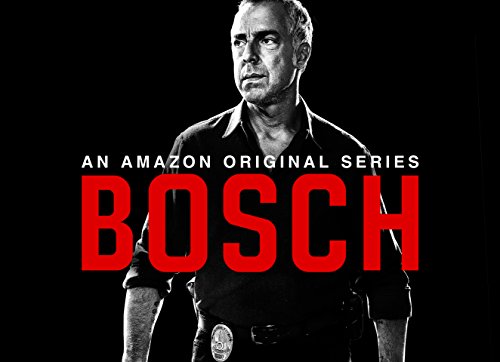
TV Review - Bosch Season 2


So if you haven't checked out Amazon's original video content, you've been missing out on some good TV. It's not as vast as Netflix's array, but with Amazon recently opening up their video service to subscription instead of just an add-on to Amazon Prime, I think it's only going to get better and better. I have so much faith in them because of a couple shows, but mostly the one I'm praising today, Bosch.

I was intrigued by the pilot when it originally aired through Amazon's Pilot Program (they put out a bunch of pilots and the subscribers vote for which ones they should make into shows) in 2014, and had totally forgot about it when the first season went up last year. I might have mentioned it here once or twice in some way or another, but one of my favorite things to consume is good detective work. Anything that showcases a detective working a case, starting from the bare facts to solving the crime captures my imagination in a way many things don't. My favorite movie is Brick, and my favorite TV show is The Wire. If you have a solid piece of content with a detective solving a case from just the bare facts to figuring out who did it, I'm your guy.

While I admit that Bosch doesn't play out much differently than an episode of CSI or NCIS, it's the delivery that sets it apart. The world of Detective Harry Bosch is shown as this pulpy, noir-tinged crime center, where our lovable tough guy ace detective is showing us the seedy underbelly of LA. It's not new, none of it is, but it's delivered in this absolute, confident manner. A kind of manner you can really only have if your source material spans something as concrete as 20 novels, as Harry Bosch has. So when I went into the first season, I was immediately hooked.

A show that from minute one of episode one knows exactly what it's doing and where it's going is amazing in this day and age, and this is exactly what you get. Since the source material is derived from books and it's a TV show, the episodes are perfectly serialized like a book. Each one gives you a payoff for the one before it while setting up the next episode, often leading you to a cliffhanger. In the first season, I absolutely loved the confidence the show had with the story it was telling, as well as how the story played out. It felt like this complete experience. And then a year later, the second season came out.

I immensely enjoyed Season Two of Bosch, and honestly it's because it's very much like Season One. And I don't mean that as an insult. Often with TV shows, the seasons will vary in quality in the beginning and the end, as they struggle to find their voice while the show is airing. Often you'll see a show start a little rocky but with promise, get really awesome for two-to-four seasons, and then falter as they struggle with the moral quandary of designing the show to go on forever and ever, and somehow finding a way to end the show in a satisfying manner. This isn't even a problem just limited to broadcast television, as Netflix has been struggling with this since the beginning of House of Cards and to an even larger degree Orange is the New Black. Both of which are "adaptations" of books themselves, but have struggled to find exactly what is appealing from the source material and delivering that to the audience. With Season Two of Bosch, I think the apparent quality of it is really a testament to the creators, as their vision is so strong of what they want the show to be that they nailed it not once, but now twice on delivering the exact visual medium of what those books should be.

Now, I haven't read a single Michael Connelly book let alone one of the twenty Harry Bosch novels (believe me I will)  but I could swear up and down watching Season One and now Two that they were perfect adaptations of the books they were from. Except Season Two actually draws inspiration from three different books, but it is so seamless in the show I never would have suspected it. Much like Season One, Season Two is a slow burn, but I never found myself anything less than enthralled with the characters. It is such an enjoyable world for me to be in that I have no problem with the way the story is told, especially as a narrative it is perfectly paced episode to episode. If there was one complaint I had about Season Two, it would be without giving anything away, the way the plot connects the dots in the case. In Season One I really liked the way the plot connected the dots for Harry Bosch and thought it made a lot of sense for the world we were in. In Season Two the plot connects the dots for Harry in an equally similar manner. I still really enjoyed it, and as a stand alone season it would have worked for me just fine, but having the case start coming together in such a similar fashion feels a little too convenient when something similar came in the previous season.

I feel a little odd discussing so little about the actual material of the show, but I genuinely feel that it is so well told that I don't want to unveil anything before the show does if you were to watch it. Is this the Citizen Cane of detective stories? No. Is this on the same level as my favorite police procedural, The Wire? No it is not. But what this is is a perfect recreation of what it's like to read a well crafted detective story. The characters and performances are solid. Titus Welliver delivers this fantastic performance as the Noir detective. Wire Alumni Lance Reddick delivers an expected fantastic performance as the Deputy Chief. I think the only actor that waivers for me is the girl who plays Bosch's daughter, and I don't really blame her for it. When the majority of the cast consists of fantastic character actors, it can be difficult to just be average. The story is enthralling and the show is shot excellently. While it's not pushing any storytelling boundaries, it is decidedly so, in a way where the creators feel the material can speak for itself without trying anything flashy.

Plain and to the point, it's excellent television if you like detective procedurals. Have you enjoyed CSI, NCIS or Law and Order? Bosch is the older, more refined version of those shows. If you have seen any of those shows, nothing here will be surprising about the characters or the story, but it's a masterclass in displaying how the story should be told. No filler, no wavering, just pure pulpy entertainment about a dude solving crimes and the problems he struggles with.

Monday, April 25, 2016

Movie Review - Nightcrawler (2014)

  
    While I wish I was reviewing a movie about the X-Men character of the same name, 2014's Nightcrawler is in fact a much more disturbing tale than that of my favorite teleporting blue mutant. Nightcrawler has us following Louis Bloom, played by Jake Gyllenhaal, as he navigates and rises through the ranks of news journalism. Specifically, Bloom wants to take on the task of a "Nightcrawler", someone who rolls around town late at night with a video camera, waiting for some sort of event to come through on the police scanner to video tape it, and then sells it to a news station for use in their broadcast. This can include car accidents, fires, murder and various other crimes.

Describing the tone of this movie is hard to exactly nail. I catch myself calling it something like charmingly disturbing. Nightcrawler is an excellent foray into the genre of thrillers, something writer/director Dan Gilroy is pretty well-versed in, having helped make two of my favorite recent thrillers, as his brother writer/director Tony Gilroy made Michael Clayton and Duplicity, and wrote the Bourne series. This family knows the thriller genre, and it shows. What we get here in Nightcrawler is an excellent turn from Jake Gyllenhaal as this...oddly likable sociopath who's goal is to start at the bottom rung and efficiently work his way to the top.

This movie lives and dies on Gyllenhaal's performance. He is in every scene of this movie, and he makes this character come alive. Someone less skillful would have teetered the movie to either too dramatic or too funny, but Gyllenhaal does an amazing job making Bloom a character who's not only amiable, but also downright terrifying. I keep stating that Bloom is charming and that he could be played too funny, and the truth is that Bloom as a character is absolutely terrifying, he's a sociopathic monster who we watch slide into increasingly dark pathways throughout the run time of this movie.

However, Bloom as a character is written in this odd, stilted way. He's this guy who presents himself as a super personable dude to the outside world, someone who is non-stop goal oriented and who endears himself to "business-like" codes of conduct in everything he says and believes. It's humorous to watch the way he talks. It comes across as incredibly uncomfortable and awkward, but the performance is so earnest, you have a hard time not believing that he believes what he says to be true. And that I think is the key to Gyllenhaal's performance. He plays Bloom so earnestly that you have a hard time not liking him on some level for being so dead-on goal oriented. Knowing exactly what he wants and figuring out exactly how to get it.

As uncomfortable and horrifying it is to see Bloom do these increasingly worse things in order to be the best Nightcrawler in town, it's also on some level hard not to respect that each calculated move he makes indeed rises him up the ladder of success to exactly where he wants to be. It seems that he learns something in every scene, and he's applying it to the next scene. It's utterly fascinating to watch. I absolutely love this movie. It's excellently shot and composed, the entire cast does a great job and the story is entirely watchable. Much like any good thriller, it's a slow burn, but at no point in time did I ever feel like turning it off, it had me hooked from the beginning with it's interesting subject matter, and watching our main character delve deeper into that world was enough to keep me on the line for the just under two hour run time.

If you like thrillers or movies that get under your skin, check out Nightcrawler.

Monday, April 18, 2016

Welcome Back

So it's been awhile. Over a year and a half since the last time I wrote anything. For awhile I was really in a creative rut, thinking I had nothing to say anymore. But since the fall I've been recording a movie podcast with some friends of mine (which I'm going to figure out how to integrate into here) and it made me realize reviewing and sharing the things I enjoy is what makes me the most happy. I want to be able to share that with you all once again. I'm not doing this for the views, (because I don't get any) I'm doing it because it makes me feel good to be able to share my experiences with all of you...whoever you are.


So welcome to Discovery Machine, your blog for movie, TV and music reviews and recommendations. While I will be reviewing current stuff, I want this blog to be about recommending things that are less common, giving less popular or overlooked stuff a chance. This has pretty much always been my mission statement, but I feel like it's needed now more than ever in a pop culture world where everything is about moving on to the next newest thing. So in the next few weeks expect to see new content from this blog. I am extremely excited to be bringing the ol' Machine back online.

Until next transmission,
Raymond

Saturday, March 7, 2015

Backlog Burnout Review of Shin Megami Tensei Persona 3 FES: Face Yourself

System(s): PS2, PSP
Release Year(s): 2007, 2008, 2010
Rating: Mature
Current Amazon Price: $98.70 (PS2 original), $15.16 (PS2 FES), $34.99 (PSP)
The Skinny:

A shining testament to the powerhouse that is the bizarre Shin Megami Tensei JRPG series from Atlus, Persona 3: FES is a lengthy, meaty, dark experience that is chock full of fun, personality, story, and enjoyment. This is a game with a unique idea pouring out of every orifice and its all wrapped up in a super stylized world that needs to be experienced.

The Meat:

Final Fantasy meets The Sims meets Silent Hill meets Pokemon. This is how I would describe Persona 3 to someone who is not familiar with it. If that sounds really bizarre to you that's because it is. It should also sound extremely fun and intriguing which would also be a correct assessment. Persona 3 is one of the most eclectic, strange, and stylish games ever made. Its mash up of genres and ideas should leave it a jumbled mess but instead it comes together to form an exquisite gaming experience that really needs to be played to be understood and appreciated.

Persona 3: FES is an updated version of the original Persona 3. There are several gameplay enhancements, as well as new story content. The entirety of the original Persona 3 is contained in a mode called The Journey, while the new 20ish hour mode called The Answer continues where The Journey left off. The basic story is that you take on the role of a new exchange student who has just arrived in the fictional Iwatodai/Port Island station of Japan to attend Gekkoukan High School. Everything seems normal when you get off the train and begin walking to your dorm, however soon everything takes on a green sheen, pools of blood appear on the ground, and all the people around you transform into coffins. Hurrying into your dorm you are met by a creepy little boy who asks you to sign a contract before disappearing into thin air. Then several other students come down the stairs with guns and begin questioning you. From this strange beginning your character embarks on an adventure that unlocks his ability to use personas, or physical manifestations of his personality. He uses these to battle monsters in the mysterious time known as The Dark Hour, an hour of lost time that exists between 12 and 12:01 AM that is only experienced by those who have unlocked their personas. i won't say any more, as the story of Persona 3: FES is excellent and one of the games many strong aspects.

From a gameplay perspective Persona 3:FES has two distinct styles that it switches between. The first of these is the exploration, persona collection, and combat that takes place around town and in the mysterious tower Tartarus that appears during the dark hour. You explore the tower floor by floor, constantly questing upwards. The tower is populated by Shadows, which are many armed black blobs wandering the floors. If they spot you they will aggressively and quickly charge at you. If you can manage to hit them with your weapon before they reach you then a turn based battle will begin on even footing. However, if they catch you by surprise or you miss then every enemy in the fight will get an extra turn to act before your party. This can be devastating and easily instantly wipe your team because the enemy AI is smart, brutal, and takes no prisoners. On the flip side if you can sneak up on a Shadow without being seen you get the same advantage. Once in battle your character can switch between the personas you have collected or created. Each different persona has different abilities, weaknesses, and stats, much like Pokemon. Magical abilities cost SP whereas powerful physical abilities cost your own HP to cast. This creates an interesting risk/reward system where to damage your opponent you must damage yourself. There are three different kinds of physical attacks (slash, pierce, and strike) as well as a full elemental system. Learning enemies weaknesses and keeping track of your own is key. If you hit an enemy's weakness it will be knocked to the ground and you will be granted another turn. Knocking down all enemies will give your party access to an all out attack where they jump on the downed party in a comic book style dust cloud of dirt and smacking sounds, dealing massive AOE damage. Care must be taken however because the enemy enjoys the same benefits as you. Get hit by an element you're weak to and you lose a turn and the enemy gains another. After battle you gain experience as well as occasionally gaining access to shuffle time. This mini game consists of cards ranging from experience boosts to additional personas. The cards rapidly switch around and it's up to you to track the one you want.

Speaking of acquiring personas through shuffle time, in classic Shin Megami Tensei fashion this game contains a robust fusing system. You can take two personas and fuse them together into a new, more powerful one, providing your character is equal or higher to the resulting persona's level. Mastery of this system is key to beating the game, as your power is directly related to your personas. There is an inheritance system in play for abilities known by the base personas as well, so careful fusing can result in powerful, custom made fighters. As the game progresses your fusion options open up to fusing 3,4,5, and even 6 personas into one powerful new force. Collecting all the available personas in the game is a similar feeling one gets from collecting Pokemon. It's fun, functional, and experimentation with different personas can reveal some fun new strategies.

One thing that may turn some players off is the lack of direct control of your teammates. They are controlled by the AI and you can give them general instructions like focus on healing or focus on knocking down the enemy. Overall the AI does a very good job and makes fairly good decisions. I actually like this system because to me it feels like you're really playing as this one character, and your party members are your friends, acting on their own to help you instead of just being mindless meat puppets tied to your whims.

Aside from the slick and smooth combat that can be found during the dark hour, there is another side of the game. This one involves time management and building of relationships in the normal world. This is an extremely strange and wonderful addition to the game. Aside from being this demon fighting bad-ass by night, your character, along with his friends, attends school and lives a fairly normal life by day. Aside from your combat stats you have social stats as well. These are charm, courage, and academics. These are raised by doing things like studying, standing up to bullies, or helping your friends with homework. These determine things like who you can ask out on dates or what activities you can take part in. The relationships you form with people, be it through dating, hanging out after school, or taking part in music club determine the strength of your social links. Each relationship you have has a specific tie to one of the arcana of the tarot cards (i.e. the magician, death, the hanged man, etc). These act as the class system for your personas. The stronger your social link is with that particular arcana, the more bonus experience it will get when you fuse it. For example, lets say you start dating a girl and your relationship with her is associated with the strength arcana. When you fuse a strength persona it will gain one bonus level. Now lets say you've been dating her for months of in game time and your relationship is pretty serious. Now when you fuse a new strength persona it will gain 6 bonus levels. This system is great because it requires decisions to be made. Do I go hang out with my girlfriend to raise the strength social link or do I go to practice with the swim team to raise the chariot link? And what about the exams coming up? I could either go to Tartarus tonight to fight some shadows and increase my combat stats, or I could spend the night studying to increase my academics stat to do well on the exams. This interaction between your social world and the combat world is the meat of the game and it meshes unbelievably well. It creates choice, tension, risk, and reward perfectly, all while giving the events of the game real meat and gravitas, all while telling a plethora of extremely interesting, interconnected sub stories.

A few final notes about the nature of the game in general and the differences between versions. One thing that must be mentioned is that this game is hard. Like really hard. The enemies are powerful, dangerous, and smart. Oftentimes elaborate strategies need to be planned out to deal with certain bosses. I personally enjoy this sort of challenge but it may turn some gamers off. This is only emphasized in The Answer mode which is significantly more difficult than the main part of the game. The game is incredibly long as well (hence the long delay since my last review). My final game clock, after completing both The Journey and The Answer was 110 hours. If that length of game is intimidating to you then I would recommend you steer clear because once you start playing you won't want to stop.

 Furthermore, there is a PSP port of this game. The graphics of the game were significantly downgraded for this version, however there were several gameplay changes. The option to play the entire game as a female was added which is a nice change of perspective. The story is the same but new character interactions and social links can take place. Also, in the PSP version it is possible to directly control your party members. So if letting the AI do its thing doesn't appeal to you then the PSP version is the way to go. However, this version does not contain The Answer, and neither does the original PS2 version.

The Bottom Line:

Perfectly fusing a multitude of disparate styles and designs, Persona 3: FES is a beautiful, bizarre, dark, wonderful game that I highly recommend. If you've got the time and the desire this game will provide you with an experience unlike any other and one I bet you will enjoy thoroughly from beginning to end. Also the soundtrack is one of the best in the business. All around an extremely solid game, and one I think any fan of JRPGs should play.
Grant Nielsen


Saturday, January 24, 2015

Backlog Burnout Review of Shadow of the Colossus: Joy and sorrow in a forbidden land

System(s): PS2, PS3
Release Year(s): 2005, 2011
Rating: Teen
Current Amazon Price: $59.90 (PS2), $19.39 (PS3)
The Skinny:

Holding a very secure spot in my top 3 games of all time, Shadow of the Colossus is a beautiful, fun, challenging game that succeeds at everything it attempts to do. An interactive work of art, this game is an absolute triumph that provides exciting action, perfect art direction and design, and an emotional experience very few games have achieved.

The Meat:

Last week I talked to you about the often forgotten gem that was Ico. This week I bring you the reason that people don't really talk about it anymore. While Team ICO created an extremely solid game in Ico their next offering completely blew it out of the water and out of people's minds. Shadow of the Colossus is a game that I believe anyone who enjoys video games needs to play at some point, and with the extremely reasonably priced Ico/Shadow of the Colossus HD collection for PS3 there has never been a better time to do it.

First thing's first. I will reveal nothing of the story of Shadow in this review. The game is an experience that is best enjoyed blind so my comments will be intentionally vague so as not to ruin it for you. What I will do however is describe what your task within the game is. Your sole purpose in this game is to hunt down and destroy the sixteen giant beings that populate the beautiful, desolate landscape of the Forbidden Land in which the game takes place. That's it. While at first glance this may not seem like enough content to fill out an entire game I can assure you it is. Gameplay is essentially broken into three different categories. Locating and travelling to each Colossi, figuring out how to destroy it, and then executing your plan.

Step one in your quest is locating your quarry. This is done by standing in sunlight, raising your sword above your head, and using the way the light reflects off of the blade to pinpoint the location of your next foe. This is a really cool mechanic because it really provides a supernatural and mystic air to the proceedings and gives the feeling that you're on an epic adventure for a higher purpose. After the sunbeams give you an idea of the general idea of where the next fight will occur your task becomes to traverse one of the most beautiful game worlds ever created. What is so cool about it is how there's really nothing in it, but that doesn't make it any less enjoyable. Aside from the occasional lizard or bird its just you and your horse exploring the remains of what was once clearly a living, breathing place but is now a haunting, empty land. There is so much story that is never said in words oozing out of every ruin, temple, and forest that you traverse. The world sucks you in and captures your imagination. Anyone who says games can't be art has never seen this game.

After you have shaken the feeling of wonder and sadness that the world invokes and actually manage to bring yourself to the lair of the next Colossi the action begins. The music swells and you find yourself face to face with some of the most epic and unique boss fights in gaming. Some of the Colossi are vaguely people shaped, some are animals, and some are just plain terrifying. One thing that they all have in common is that they all have distinct behaviors and personalities that are immediately apparent. Some are passive, some are hostile, and some seem sad. It is truly amazing how unique and unusual each Colossi is and each one brings a distinct flavor to the proceedings that prevents the game from ever getting stale, even for a moment. Their uniqueness doesn't just stop with their looks or personalities either. Each one is fought in a completely different way. While the way you kill them is always the same (climbing onto their enormous bodies like a flea and stabbing their weak-points) the specifics of each fight are completely distinct. Some involve using the environment to your advantage in order to disable the colossus or to get yourself onto it in some way. Some involve causing the colossus to do something in order to hurt itself in some way. Still others require you to fight from horseback while dodging and riding like mad. Each one is fresh, unique, and extremely fun.

Finally, once you've analyzed the landscape, personality, and nature of each battleground and colossus its time to actually do your duty. You climb aboard the giants and locate their weaknesses. These behemoths don't like being climbed on and will do everything in their power to get you off of them. This creates extremely exciting and tense moments, where you're about to land the killing blow but the creature is shaking and roaring, trying to throw you off, as your grip meter slowly drains. Dropping from the head of a 200 foot tall giant is a doom that always is lurking and providing an incentive to find secure rest points and handholds. Its difficult to explain just how epic and thrilling each fight is, but I'll try. Take the most exciting, large scale, and unbelievably crazy boss fight you've ever done in a video game and make it better. That's every fight in this game. Yeah.

The Bottom Line:

Melding aspects of puzzle games, platforming, climbing, adventure, and action, Shadow of the Colossus is a triumph in every sense. Its a beautiful game, with a mysterious story, exceptional art design, sublime gameplay, and an atmosphere that is second to none. This game receives my highest of recommendations and I envy those of you who just might still get to experience it for the first time.


Friday, January 16, 2015

Backlog Burnout Review of Ico: Living in his younger brother's Shadow

System(s): PS2, PS3
Release Year(s): 2001, 2011
Rating: Teen
Current Amazon Price: $74.99 (PS2), $19.99 (PS3)
The Skinny:

Ico is a haunting, beautiful game that is often forgotten due to it's impeccable "sequel" Shadow of the Colossus. Artistic, moving, well crafted, and only occasionally marred by awkward AI or character control Ico is an excellent, somewhat overlooked gem that you should definitely check out.

The Meat:

Shadow of the Colossus is in the top five of many people's best games of all time lists. It's consistently heralded as a work of art and is deserving of all of the praise it receives. But we aren't here for that game. We're here to talk about Ico. The "older brother" game of Shadow that, for some reason, people don't seem to talk about or like nearly as much. Is it just one long escort quest? Absolutely. Is it as good as Shadow? No. Can the AI occasionally drive you up the wall? No doubt. Is the combat kind of meh? No argument here. Do any problems that the game has fall to the wayside while you're playing it and you you realize you've lost yourself in a beautiful, desolate haunted castle and couldn't care less about minor grievances? No question.

Ico was the first major release of a development team inside SCE Japan Studio known as Team ICO. Recently  It is a puzzle/platforming game in which a young boy named Ico with horns is taken to an ancient ruin by the elders of his village and sealed inside a pod and apparently left to die. After escaping his pod he finds a strange girl locked in a cage who speaks in a language neither he nor the player can understand. This girl is hounded by mysterious shadow creatures and has some unknown connection to the decrepit castle our hero has found himself in. Together, young Ico and Yorda (mysterious foreign girl) try to escape the castle.

The entire game is one long environmental puzzle. Your only goal is to escape the castle, but this is much easier said than done. Many doors are blocked by odd statues. These statues react to Yorda and move aside for her, so the goal of most rooms is to get Yorda to the statues. While Ico is very nimble, Yorda is not at all. This creates a really fun dynamic in the game where Ico goes scrambling along tiny ledges and climbing pipes on walls to get to a higher platform, and then reaching down to pull Yorda up after him or drop a box down for her to climb up. It makes you feel like you're really helping her and she in turn helps you by opening the way forward through the castle. I personally grew attached to Yorda throughout the course of the game, which is impressive considering that she never says a word you can understand at any point.

Threatening this new budding relationship are the denizens of the castle, the ghostly shadow beasts. These dark creatures will pop up from time to time and try to steal Yorda away. They will knock Ico down, pick Yorda up, and attempt to force her through a shadow portal. If they succeed a shock wave comes from the portal, that turns Ico to stone. Yorda will also be captured if Ico leaves her alone for too long. Your job in these situations is to fight off the shadow beasts with a stick that you pick up near the beginning of the game. The combat is extremely simple, with one button for swing sword. However, there are subtle layers of nuance to it. Some of the beasts will go for Ico and attempt to incapacitate him while others bee line straight for Yorda. Or a big hulking beast will distract you in front while a smaller one flies around to sneak up on Yorda from behind. It creates tense situations where you're trying to protect her from multiple foes or chase down a flying beast that is carrying her off. While not an impressive or mind blowing combat system, it is effective and enjoyable in its own right.

The puzzle design of this game is sublime. Figuring out how to get through each room is a unique and enjoyable experience and is really divided into two parts. First off, you need to figure out how to get Ico through the room. Then you need to figure out how to get Yorda through. While some of the puzzles are fairly simple, some of them took a little outside the box thinking to unravel. Are there objects in the room I can make a bridge out of? What would smacking this do? The game perfectly walked that line of difficult puzzle solving without ever dipping into the annoying or arbitrary zone that many games fall prey to. If you're the kind of person who uses walkthroughs for games, this is one I would strongly encourage you not to do so for. The entirety of  this game is figuring out how to traverse each room, so having someone tell you how to do it really defeats the purpose and takes away the joy of accomplishment.

One of the most impressive features of Ico is how effective the atmosphere of this game is. I mean that in more ways than one. The environments are both beautiful and forbidding at the same time creating a sense of wonderment coupled with unease at all times. The way that Yorda behaves timidly and strangely, and yet seems to understand far more about what is going on than you do is intriguing and draws you in. The fantastical designs of the shadow beasts hunting Yorda are truly remarkable. Some just look like men whereas others are hulking monstrosities or bizarre birdlike creatures. There is a minimalist attitude to everything that I find refreshing. There is very little music so what is there is all the more effective. The castle is desolate and empty, except for the powerful moments when it isn't. There's no real story being told directly, so every little snippet you can discern for yourself is that much more rewarding.It is just an incredible journey that can't be adequately explained and has to be experienced.

There are a few minor gripes I have with this game. Occasionally Yorda just won't cooperate. You'll stand at the top of a ladder and yell for her to climb up and she'll just stand there for 30 seconds before doing it. Sometimes she'll refuse to jump a gap three times, and then just do it. It's rare but these moments are really immersion breakers because they show that Yorda isn't a person, she's just a stupid AI. Also, sometimes Ico won't do exactly what you tell him. If you've played Assassins creed you know what I'm talking about. Yes of course I wanted you to jump at that angle directly off the platform instead of 2 inches to your left. That's what I needed.

The Bottom Line:
.
Ico is a beautiful game that any serious video game fan should play. It has enjoyable gameplay, wonderful artistic design, an appealing main concept, and a fantastic atmosphere. Small technical gripes here and there do break immersion or cause frustration, but these moments are few and far between. Oh and let me save you a major headache and say that you can swing on chains using the circle button. You're welcome. Took me far too long to figure that out. With its recent re-release as part of the Shadow of the Ico/Shadow of the Colossus HD remaster collection you should definitely check it out. And, for its low price of $20 you get this wonderful game as well as its "sequel" which is one of the greatest games ever made. But that's a discussion for another time. Thanks for reading!

Saturday, December 20, 2014

Backlog Burnout Review of Dragon Quest: Wait is it Quest or Warrior?

System(s): NES, SNES, Gameboy Color
Release Year(s): 1989, 1993, 2000
Rating: Everyone
Current Amazon Price: $80.00 (NES), $50.00 (SNES), $299.98 (GBC)
(Please keep in mind all listed prices are for new or like new products. Buying used will significantly lower price.)

The Skinny:

This granddaddy of JRPGs, while not unplayable, is a relic of an age gone by. With very little story to speak of and gameplay that is 90% grinding very few modern gamers would enjoy this experience. However, hardcore fans of the genre may find some historical enjoyment in experiencing what many consider to be the genesis of the turn based JRPG.

The Meat:

Not too long ago I did a review of the original Final Fantasy. While that game and series was instrumental in forming the genre we now know as the Japanese Role Playing Game, there is another series which is perhaps even more instrumental. That series is Dragon Quest (known here in the states as Dragon Warrior until its eighth iteration). As an amusing side note, the reason for this name change is kind of a funny story. In the United States there was already a pen and paper RPG series with the name Dragonquest, so in order to not violate United States copyright law the name of the game had to be changed. It seems U.S. copyright law being a convoluted quagmire of handcuffing rules and annoying regulations is nothing new. Anyways, back on topic, published by Enix, this original game in that legendary series had random encounters, turn based combat, an overworld map, grinding for experience and gold, and talking to npc's (non-playable characters) to figure out where to go next and what to do. Basically, all the core elements that are so standard in modern JRPGs were popularized right here, albeit in a much more simple form. Dragon Quest would go on to release 10 more games in the main series across many different platforms, much like Final Fantasy. In fact, in Japan Dragon Quest is on par with Final Fantasy for rabid fandoms. Before taking a look at some of the later entries, some of which are among my favorite games ever, let's dig up this old dinosaur and see how it holds up.

The game opens with the King informing you that you are a descendant of the Legendary Hero Erdrick, who fought demons in ages past using a ball of light. Then the Dragonlord came, stole to ball of light, and hid it away in the darkness. It is your job as the descendant of Erdrick to defeat the evil Dragonlord. That is basically the extent of the story that is present in this game. There are a few more details that you uncover if you talk to every single npc, but the overall gist of it is found in these few sentences. And while its not the most enthralling story ever, I kind of like it for its simplicity. Here's this evil things. Go kill it. It's kind of refreshing in its own way after some of the convoluted messes I've seen in some more recent JRPGs. However, while the story may be refreshing in its simplicity, the gameplay is not.

Doing any kind of action in this game is incredibly cumbersome. Your character moves slowly and there is no run button. This wouldn't be a problem if all of the areas weren't so maze-like and sprawling. Secondly, once you manage to actually get to where you are going interacting with objects or people is more difficult that it should be. In most games, you would push the A button to interact with someone or something like a treasure chest. Not this game. When you press A a menu pops up with the options talk. status, stairs, search, spell, item, door, take. This means that to talk to people, you have to stop in front of them, open a menu, and select talk from the available options. Same with using stairs or opening a door, Nothing is automatic. You have to manually tell the game exactly what you want to do at all times. While this may seem like a small annoyance, it becomes frustrating after the 200th time you have to do it just to go up or down some stairs.

Once you manage to navigate your way out of the starting castle you will find yourself on the overworld and more than likely entering your first battle immediately due to the extremely high encounter rate. Battles in Dragon Quest consist of simple turn based 1v1 combat. It is your hero vs one monster and you take turns whacking each other until one of you dies. If its the player that dies you are revived by the king back at the starting castle with half of your gold gone. If it is the monster that dies then you are rewarded with tiny amounts of gold and experience. And here is where one of my major beefs with this game comes in. The reward you get for killing monsters is far far too low, leading to excessive amounts of grinding. And I really mean excessive. As a fan of JRPGs, I'm used to grinding and usually it doesn't bother me. However, this game takes it to a whole new level. You have to grind for upwards of 2 hours on level 1 monsters outside the starting town just to get enough gold to buy the basic starting equipment. And that is basically the entirety of the game. The monster level jump between towns is massive, so unless you've ground up enough money to buy the best available equipment from your current town you won't stand a chance. On the subject of equipment, this is another area where the game isn't very user friendly. There is no way to tell how a new piece of equipment will affect your stats or combat effectiveness in the shop. You just have to guess, based on the name and price, whether the equipment will be better than what you're wearing. Sometimes this is obvious, like the sword of fire is probably better than this dagger I'm using. However, if you're wearing the mirror armor and you see the holy armor on sale for 100000 gold in a shop, you have no way of knowing if that armor is better than what you're currently wearing and worth saving up for. It can be very frustrating to grind for 3 hours to afford equipment that is equivalent or only marginally better than what you have currently.

On a more positive note, the music is quite nice, especially considering how old the game is. Before doing the playthrough for this review, I hadn't played this game since I was a kid. Immediately when I started the game the music in the castle took me back to playing this on the NES in my grandma's basement as a child. I remembered every note from the town music, the castle music, and the overworld theme. It was a really fun experience and a testament to how well done the tunes were that they stuck with me for more than 10 years. While there are only 4 or 5 different tracks in the whole game they are all enjoyable and entertaining.

The Bottom Line:

While not a terrible game, Dragon Quest is just old. The frustrating mechanics are tolerable for a few hours, but after a time begin to really bog the experience down. From the archaic interaction system to the extreme level of grinding required to do anything at all the game just screams ancient. If you're like me and a huge fan of JRPGs and want to experience a little piece of gaming history, or if you played it when you were younger and are looking for a nostalgia trip then you may be able to glean some enjoyment out of the experience. Otherwise my recommendation would be to look elsewhere for your JRPG fun, because this old dinosaur is long since dead.


Friday, December 12, 2014

Backlog Burnout Review of Dark Souls: If it was easy it wouldn't be worth doing.

System(s): Xbox 360, Playstation 3, PC
Release Year: 2011
Rating: Mature
Current Amazon Price: $16.29 (PS3), $15.30 (Xbox 360), $19.99 (PC)


The Skinny:

While it may be more Stockholm Syndrome than actual fun, Dark Souls never the less has a strong appeal. If you're a fan of hack and slash and aren't afraid of a learning curve resembling the Great Wall then this game may just scratch your itch.

The Meat:

Dark Souls is like an abusive lover. It treats you like dirt, kicks you while you're down, makes you doubt yourself, and expects you to take it, say thank you, and come back for more. And the weird thing is you do. Dark Souls is notorious for its brutal, unrelenting difficulty and the horror stories you may have heard are not exaggeration. Anyone who says "it's not that hard" is full of crap. It is that hard, however it is the best kind of hard that a game can be. At no point in my frustrating, death filled playthrough did I ever feel like the game had cheated me or pulled a fast one. Every single one of the hundreds and hundreds of times I died was completely and totally my own fault. The game is harsh, but fair. Now the reason I'm hammering this difficulty home so hard is that it is an integral part of ever facet of the game's design. The gameplay, the environments, the bosses, the NPC behavior, it all is just HARD. And that's not necessarily a bad or a good thing. It will mean different things to different people. Let's break the game down a bit.

In the story department the game sticks with its theme of not holding your hand at all. You get an opening cutscene outlining the basic history and back story of the terrifying world you are about to be dropped in to, but no real details or explanation. If you want to find out explanations for the events around you then you'd best put on your detective goggles. Very few aspects of Dark Souls story are outright stated. They may be mentioned in passing by an NPC or implied by the design of a derelict castle. However, for all of its subtlety and secrecy I really really enjoyed the story of Dark Souls. It's dark, sad, haunting, and well worth exploring. Just be willing to put a little effort into it. In fact, that is a theme that runs through most of this game. If you don't want to put a large amount of effort into the experience, you should probably steer clear.

Gameplay wise Dark Souls is an immaculate beast of a game. Controls are extremely tight and responsive, regardless of if you're fighting with a sword, spear, bow, or magic staff. And its a good thing they are too because almost everything in this game is trying to kill you and kill you quickly. This is not a Legend of Zelda game where your hero can take more hits than an olympic boxer. If a basic enemy hits you two or three times with a sword like as not you'll find yourself respawning back at the last bonfire you visited. And death is only the beginning in Dark Souls. When you kill enemies you absorb their souls. These souls are used as currency for everything in the game. Buying things from merchants, bartering for favors, and leveling up your characters stats. When you die, you lose any souls you have collected that you haven't used. However, they are not gone forever. You will respawn at the last bonfire you rested at in an undead state and you will have one opportunity to fight your way back to the place of your death and retreive your lost souls. In this undead state you have less health and are vulnerable to invasions by other real life players in the game. If you can manage to stay alive long enough to reach the place of your earlier demise you can retrieve your lost souls. If not, they are gone forever.

The invasion aspect of Dark Souls is interesting. While in your undead, or Hollowed, state other players can invade your game and attempt to end you. Manage to fight them off and you may get a sweet payoff. You can even report their invasion of your world to an NPC who promises judgement and retribution. And there may even be a way to, if you play your cards right, become an agent of that retribution. This multiplayer aspect of Dark Souls is pretty darn cool and adds a unique element. While you may be on edge that someone will invade your world, you can also call upon the help of other players to assist you with a difficult boss. My first playthrough of Dark Souls was done as a solo run, and then I replayed it with multiplayer functionality. Both methods of play have their own strengths and weaknesses. Besting the game without another player's assistance gives a great feeling of accomplishment, however few things feel as good as smiting down an upstart player with the nerve to attack you in your own world.

Combat involves careful reactionary dodges to enemy attacks and near perfect execution. While difficult, the combat is extremely deep and rewarding, involving crits for back stabs and split second evasions. Learning a towering boss's movements and finally besting a titan much greater than yourself is an extremely gratifying experience. No matter your play style there is something for everyone here. If you want to be a massive, armor covered beefcake that is a viable option. Mage and rogue paths are available as well. No one method is more effective than another in my opinion, and they all play in radically different ways. While the combat takes time to master, it is fun and extremely fluid. Just don't expect the game to hold your hand or help you very much.

One last thing I want to mention is the atmosphere of the game. It is absolutely amazing. No matter where you are, from the giant halls of Anor Lando to the scum covered, rotting boardwalks of Blight Town the world feels real. I almost wanted to use the term alive and breathing, but that would be completely wrong. This is a dead world. Every inch of it reeks of decay, degradation, despair, and doom. And for all of that it is beautiful. In its own weird way, Dark Souls is, in my opinion, one of the best looking games ever made just because of how absolutely effective its visuals are. It really must be played to be experienced.

The Bottom Line:

If you are looking for a fun, low effort romp through a fantasy game you really need to look elsewhere. This game is brutally difficult, almost to a fault. I use the word almost because it never enters the realm of unfair or broken. The difficulty will turn many people off and rightly so. If you are a gamer who gets easily frustrated or isn't super persistent this is not the game for you. The tutorial boss killed me 5 times the first time I played. However, if you are willing to put in a little work to learn the game and can manage to beat it even within its own hellish rule set the feeling of accomplishment you will get is unmatched. I would highly recommend trying to beat the game without a walkthrough as well because like any game there are exploits that reduce the difficulty. However, this is really missing the point. Once you see past the gruff, murderous, spiky exterior and get to the burning, molten hot, pain filled interior you may just find that you are enjoying yourself. If you're like me you'll notice you're having a better time than you've had with a game in a long while. Is it "fun" in the really traditional sense of the word? Maybe not. But is it a hell of a good time? Absolutely. You're a dead man walking through a dead world, and it's absolutely breathtaking.

Grant Nielsen

Friday, December 5, 2014

Backlog Burnout Review of Final Fantasy: Far From Final, Still Fantastic

System(s): NES, MSX2, WonderSwan Color, GBA, PSP, PS1, IOS, PSN, Virtual Consoles
Release Year(s): 1987, 1990, 2003, 2007, 2010
Rating: Everyone, Everyone 10+
Current Amazon Price:
$499.94 (NES), $9.99 (PS1), $54.99 (GBA), $9.99 (PSP), $8.99 (IOS), $9.99 (PSN)
 $9.99 (Nintendo Virtual Consoles)
The Skinny: 

While the original version of Final Fantasy is nearly unplayable in the modern day many of the re-releases are still extremely enjoyable and solid JRPG fun.

The Meat:

Final Fantasy as a series will always hold a special place in my heart. This is the series that originally got me seriously into video games. Final Fantasy II was the first RPG I ever played and Final Fantasy VII is one of my favorite games of all time. While the series has had its ups and downs (I'm looking at you Final Fantasy III -_-) it is safe to say that this is one of my favorite series ever and has been the most influential on me as a gamer and a person. It is also debatably the most popular and well known JRPG series in existence. Most people have at least heard about Final Fantasy if they haven't played one before. Also, as you can see from the information provided at the top of the article, the Final Fantasy games have been released and remade on a staggering range of consoles over nearly 30 years. While the main series is about to see the release its 18th major, numbered game I thought it would be interesting to take a look back at the one that started it all.

In the late 80s there was a small software company called Square that was the computer software division of a power line construction company called Den-Yu-Sha in Japan. In 1986 Square became an independent company. They proceeded to release a series of unsuccessful games and were in danger of going under. Then, a part time employee named Hironobu Sakaguchi had an idea to develop a role-playing game similar to the Dragon Quest series (known as Dragon Warrior here in the states) from Enix that was incredibly popular in Japan at the time. The development team raised the funds internally and had complete control over their creative product as a result. No one at the company expected the game to be popular and were all anticipating that it would be their final project before the company closed permanently. As such they decided to develop the game they had always wanted to make, not the game that the higher ups always told them to. If the game was going to bomb, why not do it on their own terms, This labor of love, the team's Final Fantasy if you will, went on to become one of the best selling RPGs of all time. It not only saved the company, it rocketed Square and Hironobu Sakaguchi to the forefront of the video game industry as the people to develop quality JRPGs. Final Fantasy has gone on to become one of the most popular and beloved series ever and the original game has been re-released countless times in many different forms. Some of these versions hold up much better than others.

Final Fantasy was first released in 1987, 1990 here in the United States on the Nintendo Entertainment system. This is the version of the game available on Nintendo's virtual consoles. The setup was simple. Players chose four heroes from a list of available classes. These classes are now known as staples of RPGs the world over. Fighter (warrior), black belt (monk), thief, black mage, white mage, and red mage. The player made party are the four heroes of light, and it is their duty to restore the power to the four crystals of earth, fire, water, and wind which are being sapped by the Four Elemental Fiends. The Fiends of Earth (Lich), Fire (Marilith), Water (Kraken), and Wind (Tiamat) serve as the games primary antagonists for the majority of the experience. While this may sound like a cliche plot nowadays, this is where it started. The gameplay is simple, party oriented, turn based combat. You select your characters actions and targets from a menu and then they carry them out according to their speed stats. Monsters are fought in random encounters that are entered while moving around the overworld map or dungeons. Since this game comes from an older school of RPGs the encounter rate is extremely high. While toned down slightly in later releases of the game, it remains quite high across all versions. These encounters are where the original version of Final Fantasy falls flat. They just haven't aged well in the slightest. Some of the mechanics are so antiquated as to be laughable. For example, if you have all of your characters select the same enemy to attack and the first character kills it, the remaining three will execute their attacks against the now empty space where the enemy was instead of switching to an available target. This wouldn't be too big of a problem if it didn't take 4000000 years for characters and enemies to execute actions. A basic encounter in this version of the game can last up to 7 or 8 minutes easily depending on the amount of enemies and how often your characters waste their time wailing on empty air. While these issues can be explained away or forgiven due to how old the game is it doesn't make them any less frustrating. Luckily, these grievances are fixed by subsequent releases of the game.

In 2003 a compilation of Final Fantasy I and II was released for the Playstation titled Final Fantasy Origins. This is the version of the game available on the Playstation Network. This compilation consisted of updated versions of both games, including improved soundtracks, updated graphics, and vastly improved gameplay. The gameplay went from being a slow plod of uncooperative mechanics to a smooth and sleek experience that is fast, fun, and nice to look at. Characters now auto acquired new targets if their current targets were already destroyed and the overall pace of combat was sped up vastly. This version of the game was a dramatic improvement in every way. The soundtrack especially is worth noting. While confined to the beeps and boops of the NES the original soundtrack was still extremely impressive. Now it was freed from the technological constraints of the NES to soar to its true potential, and its easy to see why Nobuo Uematsu, the man responsible, went on to become one of the best video game composers of all time. In my opinion he is one of the best composers period, in or out of the realms of video games. From chippy MIDI tunes to sweeping orchestral pieces and even operas he never ceases to please and amaze and later releases of Final Fantasy really showcase his early talent. While this version of the game is a vast improvement over the original, it is still far from the optimal version.

The next important North American release of the game was on the Game Boy Advance in 2004. This compilation of Final Fantasy I and II was titled Dawn of Souls. This version of the game is a blast. Slight graphical improvements over the Playstation version are nice, but the true draw of the game came from it being portable and including 4 massive bonus dungeons. These dungeons are awesome love letters to Final Fantasy fans, featuring bosses drawn from Final Fantasy III-VI. These bosses and dungeons are vastly more challenging than what is found in the rest of the game and are a blast to try to complete both for new players and especially for fans of the series. If you're looking for a good version of the game to play this is an excellent choice, however the best is still to come.

The 2007 release of Final Fantasy on the PSP is the crown jewel of the game's existence, released as a celebration of the series 20th anniversary. Featuring updated graphics, updated sound, and a new bonus dungeon in addition to the bonus dungeons from Dawn of Souls, this is the most comprehensive and complete version of the game to date. The gameplay is smooth, fluid, and the animations are absolutely beautiful. While basic, it is a supremely enjoyable and fun experience. Seeing where many accepted and familiar mechanics of RPGs began is a fun experience for game enthusiasts, and casual players will enjoy the simple yet rewarding story and gameplay. This version of the game is what can be found for apple devices from the app store. However I would caution against that version of the game as the controls are not nearly as fluid as the PSP version's.

The Bottom Line:

This one is an oldie, but a goodie. While the original NES version hasn't stood the test of time all other versions of the game are still a blast, especially the anniversary edition. If you are a video game enthusiast or an RPG fan you owe it to yourself to see how the legendary series began and experience this classic. Seeing the origins of Cid (referenced here as the ancient creator of airships long ago) and other such Final Fantasy staples is a major treat as well. However if you're jonesing for Chocobo riding you'll have to wait until Final Fantasy II.

Grant Nielsen

(Also just because I'm a Nobuo Uematsu fanboy enjoy the unbelievably awesome Final Boss music from Final Fantasy I)