Showing posts with label Crime. Show all posts

Tuesday, May 3, 2016

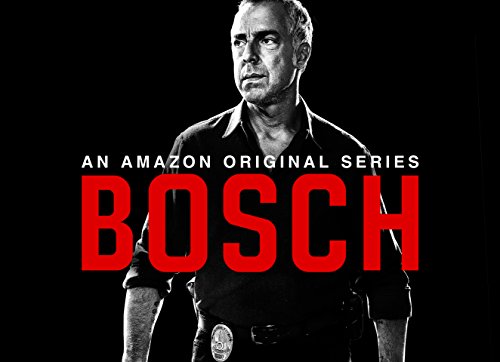
TV Review - Bosch Season 2


So if you haven't checked out Amazon's original video content, you've been missing out on some good TV. It's not as vast as Netflix's array, but with Amazon recently opening up their video service to subscription instead of just an add-on to Amazon Prime, I think it's only going to get better and better. I have so much faith in them because of a couple shows, but mostly the one I'm praising today, Bosch.

I was intrigued by the pilot when it originally aired through Amazon's Pilot Program (they put out a bunch of pilots and the subscribers vote for which ones they should make into shows) in 2014, and had totally forgot about it when the first season went up last year. I might have mentioned it here once or twice in some way or another, but one of my favorite things to consume is good detective work. Anything that showcases a detective working a case, starting from the bare facts to solving the crime captures my imagination in a way many things don't. My favorite movie is Brick, and my favorite TV show is The Wire. If you have a solid piece of content with a detective solving a case from just the bare facts to figuring out who did it, I'm your guy.

While I admit that Bosch doesn't play out much differently than an episode of CSI or NCIS, it's the delivery that sets it apart. The world of Detective Harry Bosch is shown as this pulpy, noir-tinged crime center, where our lovable tough guy ace detective is showing us the seedy underbelly of LA. It's not new, none of it is, but it's delivered in this absolute, confident manner. A kind of manner you can really only have if your source material spans something as concrete as 20 novels, as Harry Bosch has. So when I went into the first season, I was immediately hooked.

A show that from minute one of episode one knows exactly what it's doing and where it's going is amazing in this day and age, and this is exactly what you get. Since the source material is derived from books and it's a TV show, the episodes are perfectly serialized like a book. Each one gives you a payoff for the one before it while setting up the next episode, often leading you to a cliffhanger. In the first season, I absolutely loved the confidence the show had with the story it was telling, as well as how the story played out. It felt like this complete experience. And then a year later, the second season came out.

I immensely enjoyed Season Two of Bosch, and honestly it's because it's very much like Season One. And I don't mean that as an insult. Often with TV shows, the seasons will vary in quality in the beginning and the end, as they struggle to find their voice while the show is airing. Often you'll see a show start a little rocky but with promise, get really awesome for two-to-four seasons, and then falter as they struggle with the moral quandary of designing the show to go on forever and ever, and somehow finding a way to end the show in a satisfying manner. This isn't even a problem just limited to broadcast television, as Netflix has been struggling with this since the beginning of House of Cards and to an even larger degree Orange is the New Black. Both of which are "adaptations" of books themselves, but have struggled to find exactly what is appealing from the source material and delivering that to the audience. With Season Two of Bosch, I think the apparent quality of it is really a testament to the creators, as their vision is so strong of what they want the show to be that they nailed it not once, but now twice on delivering the exact visual medium of what those books should be.

Now, I haven't read a single Michael Connelly book let alone one of the twenty Harry Bosch novels (believe me I will)  but I could swear up and down watching Season One and now Two that they were perfect adaptations of the books they were from. Except Season Two actually draws inspiration from three different books, but it is so seamless in the show I never would have suspected it. Much like Season One, Season Two is a slow burn, but I never found myself anything less than enthralled with the characters. It is such an enjoyable world for me to be in that I have no problem with the way the story is told, especially as a narrative it is perfectly paced episode to episode. If there was one complaint I had about Season Two, it would be without giving anything away, the way the plot connects the dots in the case. In Season One I really liked the way the plot connected the dots for Harry Bosch and thought it made a lot of sense for the world we were in. In Season Two the plot connects the dots for Harry in an equally similar manner. I still really enjoyed it, and as a stand alone season it would have worked for me just fine, but having the case start coming together in such a similar fashion feels a little too convenient when something similar came in the previous season.

I feel a little odd discussing so little about the actual material of the show, but I genuinely feel that it is so well told that I don't want to unveil anything before the show does if you were to watch it. Is this the Citizen Cane of detective stories? No. Is this on the same level as my favorite police procedural, The Wire? No it is not. But what this is is a perfect recreation of what it's like to read a well crafted detective story. The characters and performances are solid. Titus Welliver delivers this fantastic performance as the Noir detective. Wire Alumni Lance Reddick delivers an expected fantastic performance as the Deputy Chief. I think the only actor that waivers for me is the girl who plays Bosch's daughter, and I don't really blame her for it. When the majority of the cast consists of fantastic character actors, it can be difficult to just be average. The story is enthralling and the show is shot excellently. While it's not pushing any storytelling boundaries, it is decidedly so, in a way where the creators feel the material can speak for itself without trying anything flashy.

Plain and to the point, it's excellent television if you like detective procedurals. Have you enjoyed CSI, NCIS or Law and Order? Bosch is the older, more refined version of those shows. If you have seen any of those shows, nothing here will be surprising about the characters or the story, but it's a masterclass in displaying how the story should be told. No filler, no wavering, just pure pulpy entertainment about a dude solving crimes and the problems he struggles with.

Monday, April 25, 2016

Movie Review - Nightcrawler (2014)

  
    While I wish I was reviewing a movie about the X-Men character of the same name, 2014's Nightcrawler is in fact a much more disturbing tale than that of my favorite teleporting blue mutant. Nightcrawler has us following Louis Bloom, played by Jake Gyllenhaal, as he navigates and rises through the ranks of news journalism. Specifically, Bloom wants to take on the task of a "Nightcrawler", someone who rolls around town late at night with a video camera, waiting for some sort of event to come through on the police scanner to video tape it, and then sells it to a news station for use in their broadcast. This can include car accidents, fires, murder and various other crimes.

Describing the tone of this movie is hard to exactly nail. I catch myself calling it something like charmingly disturbing. Nightcrawler is an excellent foray into the genre of thrillers, something writer/director Dan Gilroy is pretty well-versed in, having helped make two of my favorite recent thrillers, as his brother writer/director Tony Gilroy made Michael Clayton and Duplicity, and wrote the Bourne series. This family knows the thriller genre, and it shows. What we get here in Nightcrawler is an excellent turn from Jake Gyllenhaal as this...oddly likable sociopath who's goal is to start at the bottom rung and efficiently work his way to the top.

This movie lives and dies on Gyllenhaal's performance. He is in every scene of this movie, and he makes this character come alive. Someone less skillful would have teetered the movie to either too dramatic or too funny, but Gyllenhaal does an amazing job making Bloom a character who's not only amiable, but also downright terrifying. I keep stating that Bloom is charming and that he could be played too funny, and the truth is that Bloom as a character is absolutely terrifying, he's a sociopathic monster who we watch slide into increasingly dark pathways throughout the run time of this movie.

However, Bloom as a character is written in this odd, stilted way. He's this guy who presents himself as a super personable dude to the outside world, someone who is non-stop goal oriented and who endears himself to "business-like" codes of conduct in everything he says and believes. It's humorous to watch the way he talks. It comes across as incredibly uncomfortable and awkward, but the performance is so earnest, you have a hard time not believing that he believes what he says to be true. And that I think is the key to Gyllenhaal's performance. He plays Bloom so earnestly that you have a hard time not liking him on some level for being so dead-on goal oriented. Knowing exactly what he wants and figuring out exactly how to get it.

As uncomfortable and horrifying it is to see Bloom do these increasingly worse things in order to be the best Nightcrawler in town, it's also on some level hard not to respect that each calculated move he makes indeed rises him up the ladder of success to exactly where he wants to be. It seems that he learns something in every scene, and he's applying it to the next scene. It's utterly fascinating to watch. I absolutely love this movie. It's excellently shot and composed, the entire cast does a great job and the story is entirely watchable. Much like any good thriller, it's a slow burn, but at no point in time did I ever feel like turning it off, it had me hooked from the beginning with it's interesting subject matter, and watching our main character delve deeper into that world was enough to keep me on the line for the just under two hour run time.

If you like thrillers or movies that get under your skin, check out Nightcrawler.

Wednesday, March 19, 2014

TV Review - True Detective

I haven't posted anything in a little while because most of what I've been doing is catching up on series that I've been following for a long time and I didn't want to post a review of just like, Justified Season 4 when I didn't review 1-3 or How I Met Your Mother Season 9 when I hadn't done the others. For HIMYM I'm thinking of doing a show retrospective once the last episode airs next week. What I did just finished however and would love to talk about right now is True Detective.


True Detective is the new show from HBO, written and created by Nic Pizzolatto. The show was pitched as an Anthology format, like how American Horror Story is, meaning each season will be it's own self-contained thing, with it's own characters and story. This first season starred Matthew McConaughey and Woody Harrelson as two State Police detectives in Louisiana, solving a crime and exploring their lives in a 17 year period. I think it's hard to talk about the show without spoiling it at the same time, so I'm going to talk in broad strokes about the season and my general impressions and then later in the post mark a spoiler section and talk about my complete thoughts.

This first season was fantastic. In the 00's we had just...an overload of crime shows, and although they kind of died off, we're starting to see a resurgence of crime shows in the last few years that all have a specific twist. In NBC's Hannibal, we have a character who has complete empathy with the killers, in BBC's Sherlock we have Sherlock Holmes and his brilliant observation skills. In this first season of True Detective, we have Rust, McConaughey's jack of all trades detective who sees connections others do not, and often speaks in philosophical riddles about what it means to be alive. What makes this show really work for me is that it's not about the actual crime they are trying to solve so much as the conversations that Rust and Marty (Harrelson) have around the situation. While Marty is our stereotypical alcoholic, cheating on his spouse, good ol' boy detective, Rust is our nihilistic, philosophy spouting outsider, who pretty much everyone hates, but he's damn good at his job. What makes their partnership work I think is that Marty does not like Rust. He pretty much hates him, but he knows the guy knows what the hell he's talking about when it comes to solving crimes. As they make it a point to show in the show, Marty is the only reason Rust has the job he does, as he sticks up for Rust and tells the state police to keep him on the force.


The set-up to the show is interesting, and shows some creative storytelling. We open the show with older, more downtrodden versions of Rust and Marty in 2012, being interviewed separately about a case they worked in 1995. We spend a large amount of the show in 1995, with much younger, more energetic and youthful versions of Rust and Marty solving their crime. We also get a middle period where they look slightly older and some interesting things happen, and we get a bunch of time with both of them in 2012. It's a show that literally takes place over nearly 20 years, and it's executed near perfectly. The characters look respectively older and younger, depending on the time period they are supposed to be in.

The show itself is a play on the Detective genre, particularly the pulp detective stories from the 20's-40's. The crimes are often gruesome, the sexuality is rampant, and the detectives are just the unlikely pair that are able to solve the case. However, the show does a great amount to subvert the genre tropes and make something interesting. When Marty goes on about how much he loves his wife and then is actively cheating on her, we are shown that it's wrong, and that it's actively destroying his life. While we see Rust be the detective who digs into old records and old cases looking for a new lead, which is normally lauded in standard crime shows, pretty much everyone tells him to stop and that he's wasting time and money doing so. They aren't praised for their genre-normative actions.

I'd almost go and say that this season of True Detective is Film Noir style. Colors are bleak, most characters don't get a happy ending, the philosophical questions that are brought up, and the narration of most of the season. Since I absolutely love the Film Noir genre, this is easily a new favorite show of mine. Another thing I liked was that the season is 8 episodes. They're tight, concise. It's exactly as much time as the show wanted to spend with those characters and nothing more. Before I found out the show was going to be an Anthology series I would have been all for more adventures with Rust and Marty, but the way it is now is exactly what you want from a show. You have enough of these characters to get a good idea of who they are and how they interact with the world and they get a story that spans 20 years. However, we want more of them, but we aren't getting any more, which might dilute their characters down and make us think less of them. There is such a thing as too much of a good thing, in TV especially. The season felt like just enough story without running into filler, which can even happen in a show with just 12 episodes, like say, True Blood. Though that isn't strictly a good comparison, as True Blood is a show that is ostensibly about the town the show is set in and all the goings-on in it, while this season of True Detective was purely the story of Rust and Marty, everyone else was pretty much just there to serve the story.

So in my spoiler-free conclusion, this first season of True Detective was awesome. The acting is pretty much outstanding across the board, especially from McConaughey, whom it seems can do no wrong right now. The narrative and framing of the season keeps it engaging all the way through, and the writing is impeccable. I can't wait to see how they follow up this season, and how much will stay the same and how much will change. If you get a chance, check it out.

SPOILERS BELOW

One thing I wanted to address right off the bat the accusations that the show is heavily misogynistic and treats women poorly. To that, I'll say, not really. Aside from Rust using the term pussy, he treats women perfectly alright. The one time he does something poor to one is Maggie, Marty's wife, and that's because she intiates sex with him and then reveals that she specifically did it to get back at Marty. While he is responsible for having sex with a married woman, he always treats Maggie up to that point with respect, certainly more than Marty does. The character that treats women poorly is Marty, and it's not glorified. It's put right out there that he's wrong, and everyone but him thinks it's wrong to do. Against the criticism that the women characters all are just flat pieces of writing that aren't full characters...sure. But no one else is either, apart from Rust and Marty. The show is about them, and their perspectives in solving a case. Apart from them, we don't get full characters of anyone else, aside from our Yellow King, and even then he's still mostly left in mystery.

I know a lot of people also had problems with how the season ended, particularly the mystery around the Yellow King. A lot of people felt like it was anti-climatic, and I see their point. We start in the first episode with all these symbols and crazy stick built-things and crazy phrases like "The Yellow King" being thrown about, only to have it be some mentally-deranged hillbilly on a farm in the middle of nowhere. I agree that it was a little disappointing to me that we didn't get to see more of the connections there in how things went down. We just see that he's crazy, but we don't get to see him spout all the crazy stuff that led everyone to that point. Other than that though, I don't know what else I could have asked for. Our characters did all the difficult legwork to track down the bad guy, they put all the pieces together, ended up with a realistic confrontation scene and a very realistic take on what would happen afterwards to these two men. I was incredibly happy with how the season ended, otherwise. It answered all the answerable questions it asked, and it made me think about the point of life and existence and what it means to be alive and doing what you consider good.