Showing posts with label TV. Show all posts

Sunday, June 26, 2016

TV Review - Orange is the New Black Season Four (2016)


Orange is the New Black is one of the flagship shows for Netflix. Along with House of Cards, it's one of the shows that put Netflix on the map for original programming. Also much like House of Cards, Season 3 seemed to have more low points than high points in term of storytelling. Luckily, both shows seemed to have listened to critical response and have pulled in the reins for both shows, making Season 4 of both shows a high point for the respective series.

Orange is the New Black has been an interesting show for me. The premise has kept me hooked since the first episode, but the stories the show chooses to tell have kept me coming back for more. You can tell a lot of interesting stories based on the idea that the location stays the same but the population and situations change, and their is such a variety of people coming through that really you can tell any mix of stories you want that also deal with prison. That's where OitNB really shined through, with their flashback segments, showing you snippets of the different inmates lives before prison, often showing you who they were and what happened to get them into prison. It not only brought depth you otherwise couldn't get for such a robust cast, it also helped flesh out the run-time of each episode, which is crucial in a show where we are working on a limited time frame and stuck in one place.

I think as the show went on past season one, they realized something important about the show, that nearly every other character is more interesting than our main character. The first season works well for Piper, it show cases who she is and what she does and why she was in prison, and how crazy and scary that is for someone like her, who otherwise led a pretty cushy life. But after that...you know who she is, her character is pretty much spent. Using the flashbacks and bringing other storylines to the fore-front, Piper started to become just another part of the ensemble cast and not the main character, which was great because there are so many other interesting people to be following other than Piper. However, into the third season they seemed to be at an odds, where they wanted both for Piper to be the main driving force of the show and also to focus on the other characters. For that, the season ended up lacking. Tackling terrific and horrifying situations and topics and then cutting back to Piper whose ultra-seriousness about her situation undercuts how much serious stuff we're being shown otherwise. A lot of people didn't like how season three ended, I was not in that camp, but I understood the complaints and took it for what it was.

So now we get into Season 4, and it is a wild ride. The very first episode of the season shows you the impact of the Season 3 finale as anything but idyllic and saccharine. The end of season 3 was leading up to what would look like a win for the inmates, which, just writing that out indicates why that can't happen. Our main characters are in prison and they are not going to have a good time. So Season 4 starts off with a bang and things immediately get worse for literally everyone.

One thing I really liked about this season was the expansion into following the guards and Caputo and how the prison affects them as well. You end up feeling bad for the older guards and Caputo, as they struggle with losing their own humanity in the face of the job. Especially Caputo. He was never shown as a particularly good dude throughout the previous seasons, but we were shown that he cares about the inmates and sees them as people. Throughout this season he is challenged nearly every episode with the idea that the company he now works for treats the inmates as a bottom line and not as people. You see him spiral further and further, until he realizes he is at the mercy of this company and he's more just a figurehead than really in power, that he just has to sit and watch humanity being stripped away from his prison and people he's gotten to know. I think Caputo's arc is actually one of the most compelling of the show, someone who was once a sub-villain of the show gets a transition into being a good guy, and it's literally only because in comparison he's a pretty decent guy when you bring in worse people.

I think Season 4 is a great improvement on the last couple seasons. While they still seem to insist on Piper being our main character, I like that they took her down a bunch of pegs in the process. I still was unhappy with how much we're supposed to sympathize with her for some of her decisions this season, but several times I was stuck in a mindset of "she gets what she deserves." The entire premise of this season seems to be that actions lead to consequences, and if you choose the action you don't get to choose the consequence, and Piper's arc this season seems to at times forget that part and want us to feel bad for her. I mean, some bad shit happens to Piper, but what she did was not going to go without consequences and we're supposed to believe that's kind of the point of the show. Other than that though, the story arcs this season were fantastic. Everything with the new guards and new captain, CO Donuts getting a small character arc of his own and all the inmate stories, especially Lolly, Crazy Eyes and Blanca.

Another thing I really appreciated this season were the flashbacks. By Season 3, it felt a little like the flashbacks had kind of taken over for new content in the show, as a way to get you to care about any character. I enjoyed it, but it seemed like we were getting the setup for every character as we went. This season, the flashbacks were mostly just for fleshing out character backgrounds and not why the inmates were in prison (except for a couple in particular) and just showing us more about them and why they act the way they do and what their old lives were like. The thing I really liked this season though was how they handled what I will refer to as the "Walking Dead" situation. And by that I mean, much like in The Walking Dead property, it's an ensemble show about normal people being put into extraordinary, impossible situations. A situation like the zombie apocalypse or prison can't be escaped in the narrative of the show, that part can never change. So you have to rely on good storytelling and the ability to add and remove characters at times that you both see coming and don't see coming. The hang up that The Walking Dead seems to have is that they want to remove people in a shocking manner often, to keep people on their toes, but it's mostly without a good reason. Characters that have been smart their entire run will be dumb for an episode and die in that one because they were dumb. It stops being shocking in the benefit of the show, and instead feels like an exercise in drumming up ratings. Orange is the New Black handles that same kind of impossible scenario well this season. We lose one character that we saw coming the whole time, and that story arc gets to play out through the season, and we get a shocking death as well that you would never suspect to have happened. But unlike The Walking Dead, it's not completely out of character for the death to happen, they make the death happen in a way that's totally plausible, not out character for the way the person acted, and still end with a shocking death that no one would have saw prior to that scene, and for that I must commend them. Unlike The Walking Dead, you truly do not know who is safe and for how long inside Litchfield.

As strong as it was story wise, there were still some characters and stories I didn't enjoy that much. I mentioned the problems with Piper's story, and almost up there for me is the second half of Alex's story. It starts off strong, but then once the main problem is taken care of, they just put Alex back to being this mopey, stand-offish character that ends up being nearly insufferable. It would be one thing if they actually focused on her for something, but the show never does. It's just that Alex has her own problems that she's dealing with somewhere in the background of every other episode, so you never get much more than just some moping and brooding instead of any resolution with her.

Overall, I really liked where the show ended. It resolved several storylines, shocked with the way it handled the death of certain characters, and left it on a reasonable cliffhanger for the next season. The creative team pulled in the reins and worked on what made the show spark in the first place and tweaked parts that didn't work. If you liked the previous seasons, I cannot recommend season 4 highly enough.

Friday, June 10, 2016

TV Review - Jessica Jones Season One (2015)

I was set up to love Jessica Jones, Netflix's second foray into the Marvel Universe. A private detective who has a noir-like bleak outlook on life who also happens to have superpowers. That premise alone set the show up for it to be an instant hit for me, and it totally was.

As part of Netflix's own Marvel Universe plans, Jessica Jones is show number two to come out, and it's every bit if not better than Daredevil. My knowledge of Marvel comics past the Avengers tiered heroes is tenuous at best, so I went in knowing nothing about either Daredevil or Jessica Jones, and I feel like I understand the characters now more than ever. At least in these incarnations I do. While I at least knew some stuff about Daredevil, I really knew nothing about Jessica Jones, her supporting cast, her villains or even her powers. While Season 1 of Daredevil (and later Season 2) made me believe Marvel could do true-to-life representations of their characters through Netflix, Jessica Jones made me believe Netflix should be the place to do all their characters.

The setup to this first season of Jessica Jones was pretty simple. Jones, played by Krysten Ritter is a New York private detective, working in the slums of Hell's Kitchen. The twist? She has superhuman strength and flight-like jumping abilities. It also just so happens that her life has been a living hell. We start the series with a small amount of P.I. work, but it mostly revolves around tracking down Kilgrave. Kilgrave, played by Doctor Who's David Tennant, is a man who has what I would ultimate power of suggestion, but the show calls it mind control. Essentially, anything he says as a command to someone, they must do. Their body will not let them stop until they think they've done the task he has commanded. Often leading to torturous, brutal results.

Kilgrave's power might be the most fascinating real-world application of a comic superpower I have ever seen. So many people, myself included, have wished we had the power to compell people to do things just by telling them to do so, usually just for the fun of the situation. But Jessica Jones takes that idea of wish fulfillment to a whole 'nother level, as it rounds out that idea with the notions that A, actions have consequences, and B, that the person who wields that power could be a psychopath. It's an evil form of the Jedi Mind Trick. You get to see the fun side of the power as Kilgrave uses it a couple times to have a guy give him a cool jacket right off his back, and able to get around police in a hostage situation to save the day simply by telling the bad guy to stop. But then you get the nasty, brutality of the power. Women being compelled to not move off a bed or leave a room for days at a time, being raped because he tells them they want it, forcing people to brutally injure or kill themselves just because he said so.

It's absolutely fascinating to me, and is what makes Jessica Jones Season One better than Daredevil Season One for me. As much as I enjoyed Daredevil, a lot of his show is wrapped around his personal conflict of what it means to be a hero and why as well as stopping comic book-y plots of violence, that are entertaining, but feel less grounded in reality. While you enjoy the ride and want Daredevil to win, stopping Kilgrave feels imperative, because a monster who has the power to tell people to do whatever he wants them to do affects everyone he comes near.

The only real disappointment I had with Jessica Jones was knowing that the entire season was going to be spend dealing with Kilgrave, because they set Jessica Jones up to be a series about a super-powered alcoholic New York private eye, and that's a show I want to see. I understood why they had to do it, I just wrote it myself, you can't let Kilgrave roam free because he is just too powerful. And much like Season Two of Daredevil, which addressed some of my story issues with the first season (being essentially one plot for a tv season) I assume Season Two of Jessica Jones will do the same. It really wouldn't even be that much of a disappointment if I had more Jessica Jones to watch, as it's a time sensitive criticism. I just want to see more of that world now that the impending threat is out of the way.

Jessica Jones was brought to screen by a woman and three of the main characters are women and it feels fantastic to see the Marvel brand get that kind of expansion because it has been severely lacking in the rest of Marvel's live action universe. Jessica Jones feels like a real person, Patricia Walker feels like a real person and so does Jeri Hogarth, Jones' go-to lawyer. They are all out there doing their own thing being characters who progress the plot, and that makes me so happy. Everyone gives a great performance, especially Carrie-Anne Moss as a razor-sharp defense lawyer, and David Tennant as Kilgrave, both being as charismatic and endearing as characters as they were evil and conniving. Seeing the introduction of Luke Cage as Jones' lover and bartender was fantastic, and the story was compelling through and through. I couldn't be happier than I finally sat down to watch this masterpiece of television.

Tuesday, May 3, 2016

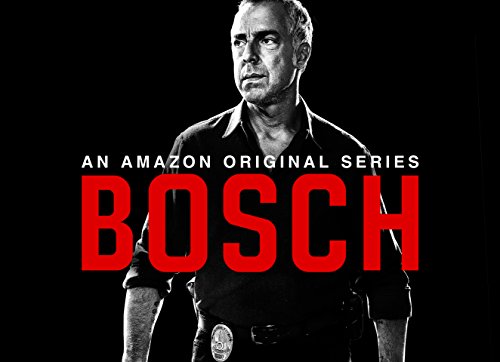
TV Review - Bosch Season 2


So if you haven't checked out Amazon's original video content, you've been missing out on some good TV. It's not as vast as Netflix's array, but with Amazon recently opening up their video service to subscription instead of just an add-on to Amazon Prime, I think it's only going to get better and better. I have so much faith in them because of a couple shows, but mostly the one I'm praising today, Bosch.

I was intrigued by the pilot when it originally aired through Amazon's Pilot Program (they put out a bunch of pilots and the subscribers vote for which ones they should make into shows) in 2014, and had totally forgot about it when the first season went up last year. I might have mentioned it here once or twice in some way or another, but one of my favorite things to consume is good detective work. Anything that showcases a detective working a case, starting from the bare facts to solving the crime captures my imagination in a way many things don't. My favorite movie is Brick, and my favorite TV show is The Wire. If you have a solid piece of content with a detective solving a case from just the bare facts to figuring out who did it, I'm your guy.

While I admit that Bosch doesn't play out much differently than an episode of CSI or NCIS, it's the delivery that sets it apart. The world of Detective Harry Bosch is shown as this pulpy, noir-tinged crime center, where our lovable tough guy ace detective is showing us the seedy underbelly of LA. It's not new, none of it is, but it's delivered in this absolute, confident manner. A kind of manner you can really only have if your source material spans something as concrete as 20 novels, as Harry Bosch has. So when I went into the first season, I was immediately hooked.

A show that from minute one of episode one knows exactly what it's doing and where it's going is amazing in this day and age, and this is exactly what you get. Since the source material is derived from books and it's a TV show, the episodes are perfectly serialized like a book. Each one gives you a payoff for the one before it while setting up the next episode, often leading you to a cliffhanger. In the first season, I absolutely loved the confidence the show had with the story it was telling, as well as how the story played out. It felt like this complete experience. And then a year later, the second season came out.

I immensely enjoyed Season Two of Bosch, and honestly it's because it's very much like Season One. And I don't mean that as an insult. Often with TV shows, the seasons will vary in quality in the beginning and the end, as they struggle to find their voice while the show is airing. Often you'll see a show start a little rocky but with promise, get really awesome for two-to-four seasons, and then falter as they struggle with the moral quandary of designing the show to go on forever and ever, and somehow finding a way to end the show in a satisfying manner. This isn't even a problem just limited to broadcast television, as Netflix has been struggling with this since the beginning of House of Cards and to an even larger degree Orange is the New Black. Both of which are "adaptations" of books themselves, but have struggled to find exactly what is appealing from the source material and delivering that to the audience. With Season Two of Bosch, I think the apparent quality of it is really a testament to the creators, as their vision is so strong of what they want the show to be that they nailed it not once, but now twice on delivering the exact visual medium of what those books should be.

Now, I haven't read a single Michael Connelly book let alone one of the twenty Harry Bosch novels (believe me I will)  but I could swear up and down watching Season One and now Two that they were perfect adaptations of the books they were from. Except Season Two actually draws inspiration from three different books, but it is so seamless in the show I never would have suspected it. Much like Season One, Season Two is a slow burn, but I never found myself anything less than enthralled with the characters. It is such an enjoyable world for me to be in that I have no problem with the way the story is told, especially as a narrative it is perfectly paced episode to episode. If there was one complaint I had about Season Two, it would be without giving anything away, the way the plot connects the dots in the case. In Season One I really liked the way the plot connected the dots for Harry Bosch and thought it made a lot of sense for the world we were in. In Season Two the plot connects the dots for Harry in an equally similar manner. I still really enjoyed it, and as a stand alone season it would have worked for me just fine, but having the case start coming together in such a similar fashion feels a little too convenient when something similar came in the previous season.

I feel a little odd discussing so little about the actual material of the show, but I genuinely feel that it is so well told that I don't want to unveil anything before the show does if you were to watch it. Is this the Citizen Cane of detective stories? No. Is this on the same level as my favorite police procedural, The Wire? No it is not. But what this is is a perfect recreation of what it's like to read a well crafted detective story. The characters and performances are solid. Titus Welliver delivers this fantastic performance as the Noir detective. Wire Alumni Lance Reddick delivers an expected fantastic performance as the Deputy Chief. I think the only actor that waivers for me is the girl who plays Bosch's daughter, and I don't really blame her for it. When the majority of the cast consists of fantastic character actors, it can be difficult to just be average. The story is enthralling and the show is shot excellently. While it's not pushing any storytelling boundaries, it is decidedly so, in a way where the creators feel the material can speak for itself without trying anything flashy.

Plain and to the point, it's excellent television if you like detective procedurals. Have you enjoyed CSI, NCIS or Law and Order? Bosch is the older, more refined version of those shows. If you have seen any of those shows, nothing here will be surprising about the characters or the story, but it's a masterclass in displaying how the story should be told. No filler, no wavering, just pure pulpy entertainment about a dude solving crimes and the problems he struggles with.

Friday, September 12, 2014

TV Review - Bojack Horseman - Season One


After being prompted by a friend and hearing mixed feelings about the show, I decided I should check out Bojack Horseman, one of Netflix's new original series, an animated show about a washed up 80's actor and his life post-stardom, starring an anthropomorphic horse and a whole star-studded cast of comedy cold.

In the weird world of Bojack Horseman, we follow our title character (voiced by Will Arnett), a delusional ass-hat who starred in a late 80's, early 90's sitcom like a Full House or Step by Step situation, but has been pretty much out of work since, due to his attitude and behavior. We follow Bojack and his friend/unofficial roommate Todd (Aaron Paul) as Bojack puts off writing a book he has promised Penguin Books until they convince him to get a Ghostwriter (voiced by Alison Brie.) From there, the show is watching Ghostwriter Diane try to capture Bojack's life while she befriends him and he continues to be a mess.

Between this we also meet Princess Carolyn, a cat voiced by Amy Sedaris that is both Bojack's agent and his on-again/off-again girlfriend, Pinky Penguin, voiced by Patton Oswalt as his book publishing agent who is in dire need to have Bojack finish his book, and Mr. Peanutbutter, voiced by Paul F. Tompkins, an anthropomorphic dog who starred in a show just like Bojack's that is also dating Diane. The cast is wonderful, the world is weird and it's hard to describe why exactly I liked it.

Thematically, the closest I think you get to a show like Bojack Horseman is like Archer or Bob's Burgers, but it's definitely not the same. While all three shows trade insults and jokes at lightning speed, Bojack is a lot darker than either of those too and takes a different approach to storytelling. Bojack Horseman follows a serialized pattern, meaning after the first couple episodes, they all fall into place with one another to tell one story, and each episode is a continuation of the last. That's one way the show is different from most animated adult shows of it's type, it's trying to tell one singular set of stories episode to episode, instead of each episode being self-contained. Another thing is that it's way more of a drama than a comedy towards the back half of the season, but still contains funny moments.

I think Bojack fits in with the other good matieral Netflix has decided to support, as it's just as hard to classify as one of those things. Take a look at Orange is the New Black, you can't call that show just a Drama, certainly not a Comedy, but it has a mixture of both that probably fits that moniker "Dramedy" as well as switching narratives and episode formats a lot. While Bojack focuses primarily on this one set of characters, it does expand out to tell the stories of other characters as well as telling a serious story with jokes instead of a funny story with some serious moments.

Bojack Horseman is actually fairly bleak. I've head a lot of people have problems getting past the first episode, some people don't get into it until episode 4-5, and that's when the narrative really picks up speed and the show switches up style. While the first four episodes further the overall narrative, they work as standalone episodes of the show that try and contain their whole story arc in 25 minutes. From episode 5-12 however each episode follows the other and ties into this overarching story and I think this is when people get hooked. Starting with episode five we find Bojack falling in love with his ghostwriter Diane, who is dating his longtime rival and Bojack finds out his old best friend is dying of cancer. Two very serious subplots with very serious repercussions.

I'm not going to spoil the show because it's still pretty new and a lot of people haven't seen it yet, but I think what gets people hooked with these subplots is how human they really are. Bojack reacts in an exaggerated yet truthful way to finding out the girl he is in love with is going to get married to a guy he resents and the situation with his old friend dying of cancer is a very believable and true-feeling one.

I think the conceit of Bojack Horseman is that it's telling a very human story through the guise of this cartoon anthropomorphic world so people take it less seriously, but it's darker than most animated shows I have seen, and that is part of what I think makes it so great. There are also great light-hearted moments, like director Cameron Crowe being realized as a Raven that people mistake for a Crow because of his name, or Neal McBeal the Navy Seal (voiced by Patton Oswalt) who called dibs on a box of muffins, which Bojack ignores and it spirals out of control into this idea that Bojack hates the troops because he didn't respect the guy's dibs. I like the animation style, the voice work by Arnett, Paul, Oswalt, Brie and the rest of the crew is exactly what the show needed, and the into song (written by half of The Black Keys) and the outro song are tonally great and fun.

Overall, I really enjoyed Bojack Horseman, and I recommend people who either haven't started it or haven't gone past the first few episodes to make it to episode 5-6 and see if they still don't like it. It seems to be polarizing overall, and I know at least one person who never ended up liking it despite watching all the way through. All I can say is to give it a chance and you might find it as rewarding as I did.

Thursday, September 11, 2014

TV Rewatch - South Park - Season Eight


So I've given up the idea of catching up with South Park before the new season in a couple weeks, but I will catch up eventually, just on a much slower time table. I've finished Season Eight and decided I should get around to writing about it. While not my favorite season of the show and less funny than the last two, season eight is still a solid effort from Parker and Stone, delivering their now trademark brand of humor to real life current situations.

The first episode of the season Good Times With Weapons was a favorite of mine for it's contrast of humor and serious situation. In the episode, the boys get Japanese weapons and the show uses anime art style conventions to convey when the boys are role-playing with their weapons. Everything is silly and a laugh until they go to fight Anime Butters, when Kenny actually throws his Throwing Star at him and it lands square in his eyeball. Then it cuts back to regular animation to show the severity of what has happened, Butters actually has that Throwing Star stuck right in his eyeball and the rest of the episode is them trying to figure out how to get poor Butters help while not revealing it was their fault. Not the funniest episode of the season, but the combination of an ultra-serious situation with this ridiculous anime schtick thrown on top made me really appreciate it.

In Up The Down Steroid, Timmy and Jimmy are training for the Special Olympics, and Jimmy takes steroids to try and give himself the edge. The episode plays off the tropes of what happens to those who take steroids to get ahead in sports but places it in context of disabled people. At the same time, once he finds out there is a cash prize, Cartman decides he will disguise himself as developmentally disabled to win. What I love most about the episode, besides Jimmy's end rant on how using steroids are unfair to competition, is that Cartman's plan backfires epically when he spends all his time training and researching how to be believably disabled and not training to win the Olympics themselves and falls last in every single competition.

Other highlights include You Got F'd In the A, a You Got Served parody, Awesom-O, when Cartman disguises himself as a robot as a prank on Butters and ends up on a hijinks-filled adventure, The Jeffersons, when Parker and Stone point out what was wrong with how Michael Jackson lived his life and the corruption of cops, Goobacks, where Parker and Stone tackle immigration issues, Quest For Ratings that talks about the real-life problems with making tv shows and movies in this day and age, Stupid Spoiled Whore Video Playset, that talks about the true-to-life and still on-going problem of having socialites like Paris Hilton be role models for young girls and Woodland Critter Christmas, in which Rankin/Bass looking animals are preparing for the birth of their lord and savior, the anti-Christ...the animals are all followers of Satan.

As you can see, a lot of good episodes in Season 8, but it just didn't feel as funny to me as the last couple were. Season 8 was notoriously difficult to make, as yet again it was a season made at the same time as Parker and Stone made a movie, this time being Team America World Police. They felt like they were hitting a wall trying to write episodes, and although it feels like they pulled through and did a good job, it also feels like they could have done better had it been their main project.

Wednesday, August 27, 2014

TV Rewatch - South Park - Season Seven

I'm about halfway through Season Eight currently, so I figured I'd take a step back and evaluate what I thought about Season Seven in relation to the others. I think Season Seven is an even season, continuing on the success of Season Six, with some new concepts and fun ideas, but mostly delivers the South Park everyone knows and loves. I say these things because even though I have yet to see them, I've heard the more recent seasons of South Park take a dive until Parker and Stone's Book of Mormon play came out, and then the show apparently picks back up with renewed creativity and energy. I'm not sure exactly when the slump happens, but as I progress further and further I must assume I'll be upon it soon enough, and I want to be able to critique exactly why it will feel inferior to these seasons.

This season Parker and Stone continue to play with the character of Kenny, in that this time he continues on from his appearance in the Christmas episode of Season Six, with no explanation as to why he's returned, and not once explains why he's back nor kills him at all this season. On one hand I feel like one of the stand out points of the early seasons and the character of Kenny is the no-further-explanation death sequence in most episodes followed by his appearance and then subsequent death in the next episode. It was something absurd in a show that otherwise played off of otherwise just exaggerated stereotypes of people in a small, backwoods town.

On the other hand, I definitely understand why they decided to stop killing him. They literally did it for 4 seasons straight and a feature length movie. "They killed Kenny, those bastards!" Became a part of the cultural identity of the show, and after all that time I assume they just felt like they had done everything they could with the joke and to do it longer would just be treading upon the same material over and over again. Plus, as the show gets weirder and weirder as Parker and Stone look for boundaries to push each season, Kenny's death not only feels less absurd, but limits how they might want to tell an episode. So all in all, I'm glad Kenny is back in Season Seven and isn't killed once. It shows growth and expansion from the writers and creators.

Season Seven to me isn't as good as Season Six was, but it's only just slightly inferior. Right off the bat, the first episode of the season, Cancelled, which re-uses scenes and dialogue from the very first episode in a plot that involves Earth being just a big reality show for some aliens and that they're stuck in a repeat. It's just the right amount of meta humor and new content mixing with references to the old that I enjoy from the series and while the concept itself is nothing new, it's presented in true outlandish South Park style.

The next episode Krazy Kripples is one of my favorites. In it, Jimmy gets mad that Christopher Reeve upstages him at a speaking event and decides to declare war on those made crippled after the fact instead of being born with it. After a series of misunderstandings, Jimmy and Timmy join the Crips, thinking they're actually crippled people, and fight the Bloods. All the while, all the main characters check back in at major plot points and just comment that they're "not going anywhere near this one." and walk back off-screen. This was a storytelling device I really enjoyed because it indicates that Parker and Stone clearly know the story they're telling could be considered offensive if told through the format of a regular episode, but since the whole thing plays out with the characters two crippled characters and shows them at the focal point and how they could come up with the idea that Crips is a gang for crippled people, it comes off as not making fun of the handicapped and instead the situation the kids got themselves into.

The episode Toilet Paper is one that I felt was weak, but still enjoyable. The episode plays off as a series of references and homages to famous crime dramas and thrillers, mostly Silence of the Lambs, but includes references to Godfather Part II, Scarface and a scene from Platoon. While I stilled laugh with the episode, it felt weaker since it was taking most of it's jokes from references than things actually happening in the episode.

There are absolute gems in this season however,Red Man's Guilt, an episode where a play on history reversal happens and the Native Americans that own the new Casino near South Park intend to take the town of South Park to demolish it and build a highway to their Casino no matter the cost. Special mention for that episode for having their main Native American character named "Runs With Premise" and by the time they beat the joke into the ground in the last third revealing his son's name to be "Premise Running Thin." It's a 4th wall joke I can get behind because they know it's bad. Other highlights include South Park is Gay!, where all the males in town become "Metrosexual" and Kyle and Mr. Garrison go off to kill the men behind it, the cast of Queer Eye For The Straight Guy. Christian Rock Hard, where the boys use Napster and get caught downloading songs illegally and end up coming out against music piracy while showing how ludicrous some of these "artist damages" claims are. Plus Cartman's attempt at creating a successful Christian Rock band is hilarious to me because I grew up Catholic and heard a lot of Christian Rock music, and every parody was spot on.

The episode Grey Dawn not only parodies Red Dawn but also brings forth another culturally important topic that had been newsworthy at the time and is still relevant, should senior citizen's be allowed to drive? The episode is the perfect South Park mixture of being funny while also being culturally relevant and presenting the argument in a fair and honest way. Another highlight is the episode All About The Mormoms, which is literally an episode about how crazy the origin story of Mormonism is, followed by another two favorites, Butt Out and Raisins, where Rob Reiner comes to town and demands everyone stop smoking and where Stan gets dumped and joins the Goth kids, respectfully. Both episodes drive down to the heart of the matter and get just as many laughs as insightful moments into the situation and it reaffirms why I love the show so much. No matter how crude, the show finds interesting and compelling ways to portray real-life issues with a no-holds-barred mentality.

TV Rewatch - South Park - Season Six


I ended up taking some time off between Seasons 5, 6 & 7 of South Park because I realized I was burning out on the show, as most readers could probably have guessed would happen with a show this long. I'll write later the stuff I watched in-between, but for now I guess I better focus on Season 6.

Season 6 was a lot of fun and delivered a lot of laughs and shook up the format once again, proving the show still had things to say. At the end of Season 5, Parker and Stone took a big risk and "really" killed Kenny. No one knew what that would mean for the show until the beginning of Season 6, when Kenny was shown to be truly dead in universe. This gave the creators a way to talk about death, and how kids might interpret death, as the first 12 episodes of the season deal on and off with the fact that Stan, Kyle and Cartman have trouble accepting that Kenny is dead and can't seem to find a replacement friend for their gang. This leads to one of my favorite characters, Butters, to get way more screen time than he has previous seasons and it's refreshing to see how his character flourishes in this world, and all the weird shit that it brings.

The season starts off with a bang with Jared Has Aides, an episode about Subway spokesman Jared Fogle coming to town to speak, and through a serious of unfortunate phrasings, makes everyone think he lost all his weight from AIDS, instead of with the help of personal trainers, or aides. While I found that plot initially funny it itself, about halfway through I just got tired of the joke because it just kept going and going. What saved it for me however was the fact that they knew it has gone to long and right towards the end of the episode have Jared beating a dead horse, aka, beating the joke into the ground. That saved it for me, knowing that they knew the joke was becoming less funny the more they said it. This same kind of 4th wall breaking logic showed up again in Season 7's Red Man's Greed, but I suppose I'll get to that when the time comes.

The rest of the season had great episodes too, like Asspen, an episode where the boys visit Aspen and invariably get sucked into an 80's romantic comedy about skiing, Fun With Veal, where the gang learns about how Veal is made and go on a hunger strike. Really the whole season is a hit, with episodes like the two parter Professor Chaos and Simpsons Already Did It being among the best. In these episodes, Butters gets kicked out of the gang and decides to become a supervillan, but he's so innocent and nice he can't do anything that bad. In the second part, Butters realizes that all of his evil plans to take over the world have already been done by The Simpsons, and the whole episode turns into a pastiche of the Simpsons, where the rest of the gang re-create a famous plot about acquiring sea people and raising their own society in a fishbowl and the characters turning into Simpsons designs in Butters' eyes. It's a set of episodes I praise highly, and not only because they're actually funny, but also as a kudos to the writers for making an episode of the show about how another show has basically taken every wacky plot they could think of. That's a level of meta-referencing Family Guy wishes they had.

Other standouts for me included Free Hat, a Raiders of the Lost Ark parody surrounding Spielberg and Lucas continuously changing their films; A Ladder To Heaven, in which the boys win a shopping spree in a candy store but realize Kenny had their winning ticket they need to redeem on him when he died, so they attempt to build a ladder to heaven to get it back from him; "The Return of the Fellowship of the Ring to the Two Towers, a Lord of the Rings parody about returning an accidentally acquired porn video back to the video store;  The Death Camp of Tolerance, where the overly PC-nature of our culture is brought into question when Mr. Garrison tries to get fired for being gay, but can't no matter how many obscene or inappropriate things he does, and My Future Self  n' Me, where adult versions of the some of the kids in town shown up to warn their kid selves about their bad habits. Like I said before, the whole season was pretty spectacular, I can't even really think of a low point, even the Christmas special parodying Black Hawk Down was wonderful.

One of my favorite things of the season is how they treat the character of Kenny, someone who has been their go-to punchline joke for the previous 5 seasons. They killed him at the end of last season, spend the first 12 episodes having the kids explore topics of death, grief and mourning over the loss of their friend, then have the last 4 episodes involve this wacky plot where Cartman swallows Kenny's ashes thinking their chocolate milk mix and Kenny's soul starts possessing him. Then after all that is resolved without Kenny coming back to life, the Christmas episode at the end of the season has him show up at the very end and go "Hey guys, what did I miss?" And the Stan says they'll fill him in on what happened. One of the things that works both for and against South Park is it's sitcom-y ability to forget or remember any plot points that might be relevant at any point in time, and while sometimes it gets annoying (like most religious episodes where they don't have the Jesus character) I think conviently forgetting anything that happened to Kenny just to bring him back as a main character in the next season was a funny move by Parker and Stone in similar tradition to how they used to always kill him and have him be fine the next episode.

Wednesday, August 13, 2014

TV Rewatch - South Park - Season Five


Season Five of South Park really picked up where I thought season four lacked. It was not only shorter, which made the season feel stronger overall, but it also had more cohesive writing and interesting new character developments that brings some new life into the shows fifth season.

This season is full of winner episodes and really is a must-watch overall. Episodes that had an interesting take on a cultural message this time were in full force. This time, they include the first episode It Hits The Fan, as well as Cripple Fight, Cartmanland, Proper Condom Use and Here Comes The Neighborhood. All of these were stand-out hits for me this season, with It Hits The Fan making fun of the overreaction of NYPD Blue saying "shit" on network TV, Cripple Fight taking on the Boy Scouts banning homosexuals from being in the Scouts, Cartmanland about dreams vs. reality when it comes to getting the thing you want most, Proper Condom Use about the various inappropriate methods in which sexual education is taught in schools and Here Comes The Neighborhood, where Token feels ostracized from his friends because he's richer than everyone else in town, but realizes he doesn't fit in with actual rich kids he convinces to move to town when he's ostracized by them too.

Each of those episodes swiftly and expertly get their message across while being funny in their own right. The episode Osama Bin Laden has Farty Pants is a special one because it intentional skews the line with an outrageous sub-plot but also a message driven main plot. Of course, this was the first episode made after September 11th, 2001. The main plot of the episode is that South Park elementary forces the boys to donate a dollar each for supporting kids in Afghanistan, and an Afghani equivelant of the gang send a goat back in return. The boys get caught in the middle as they try and send the goat back and end up in Afghanistan themselves. The sub-plot being a parody of a Bugs Bunny cartoon with Cartman and Bin Laden. The boys learn a new world perspective from the Afgani kids and Parker and Stone give America exactly what they wanted and has Cartman as Bugs Bunny beating down Bin Laden as Elmer Fudd. Many people list this episode as their favorite, and it's understandable why. South Park was pretty much the only show of it's kind where they could tell a cartoon-y story making fun of Osama Bin Laden, and in a time where America needed something to laugh about in a time of immense tragedy, they really pulled through with not only a message about tolerating and accepting other cultures and accepting that our Pro-America world view might not be shared by people outside America, as well as a fist-pumping, patriotic nod to the country as Cartman takes down Bin Laden. It's definitely a highlight of the season for me.

The other two highlights of the season for me is Scott Tenorman must die, where Cartman's Hannibal-based plan to exact revenge on a 9th grader takes Cartman to a darker, more diabolical place that they make note of in future episodes. It also signifies a shift in how Parker and Stone make the episodes, where now the majority of episodes from this season onward try to focus on just one plot and not an overarching plot and several minor plots. This allowed them to get more creative with the stories they were telling instead of focusing on a whole revolving cast of characters they need to include. My absolute favorite episode however, which I didn't realize was special when I saw it as a kid, was the episode Kenny Dies, where Kenny gets a muscular disease and dies a slow, agonizing death that's played for real.

Parker and Stone pulled another trick like they did at the end of the Season One, where they set up the question of who Cartman's dad was and then went on season hiatus, then came back for a Terrance and Phillip only episode before coming back later revealing the conclusion of the story. At the end of Kenny Dies, Kenny obviously dies. But it was the second to last episode of the season, and the last episode was a Butters only episode (which was also a highlight for me in how dark it was) so viewers had to wait until season six to know whether or not Kenny was really dead.

Overall, this season was exceptionally good, and brought us both Jimmie (a personal favorite) and Towelie. The episode I think I liked the least was How To Eat with Your Butt, a whole episode based around a single joke, that there were people in the world born with a butt over their face. Not a terrible episode, but it was pretty much the entire joke of the episode, in a season full of great jokes, that one just felt middling to me. In the end, Season five was totally worth it and a nice pick-up from the dip that season four was for me.

Thursday, August 7, 2014

TV Rewatch - South Park - Season Four

I spent a good half a week nerding out about Guardians of the Galaxy, so now I'm back to marathoning South Park from beginning to current. And here I am with Season four completed.

Season four is the first season where I thought the show was lacking. While it had a good lot of funny jokes and gags, nothing in this season made me laugh as hard as anything in the first three seasons or the movie. The show still delivers on some quality jokes, laughs and interesting ways to view adult scenarios, some episodes just felt like they were either a little too loose or too out there and could have used a little tightening up.

While I though early season episodes Cartman's Silly Hate Crime and Timmy 2000 were humorous and had a worthwhile statement to make, they spend too long trying to force their viewpoint on the audience, when the audience is likely made up of people who agree on their stance to begin with. Meanwhile, the episode streak of Cartman Joins NAMBLA, Cherokee Hair Tampons, Chef Goes Nanners, Something You Can Do With Your Finger, Do The Handicapped Go To Hell?, Probably, 4th Grade, and Trapper Keeper were the strongest episodes of the season, which generally provided an  interesting if not overzealous condemnation of some part of American culture and provides the best jokes and laughs of the season. The idea that Cartman, who looking for older men to make friends with becomes the poster child for a pedophile group was in particular one of my favorite sub-plots because it plays the line so well of being both a mockery of such a ridiculous group like NAMBLA and also making it believable (though unlikely) that someone like Cartman in real life could have this happen to him.

That I think is what is one of the strongest features of the show, bringing in believable child-like innocence to the plots. The show often deals with incredibly adult situations that the boys get themselves into, but the way in which they get themselves into it feels like it's something an innocent, well-meaning child could accidentally get into...unless they play it up to the incredibly absurd which they do on episodes like 4th Grade and Trapper Keeper, which both involve convoluted time travel plots played up as taking off nostalgia blinders in the former and the comically-absurd dangers of ever-changing technology in the later. But then even in the episode Trapper Keeper, the subplot of Ike's Kindergarten class having immense difficulties picking a class president is a direct parody of the 2000 election of George Bush and the recounts that took place in Florida at that time.

The weakest episodes to me were Quintuplets and Pip. While both had merits, they just kind of fell flat to me. Quintuplets felt like the weakest episode overall, because although I didn't like Pip a great deal, I appreciated the fact that they were comically recreating the novel Great Expectations as told through a show like Masterpiece Theater but in South Park style. It worked better as a concept as it does in reality I think, and I do want to give them credit for doing something different, it just fell flat for me.

My favorite episode overall however has to be the second to last episode, The Wacky Molestation Adventure, in which one by one every kid in town reports that an adult molested them, until only children are left, and they create themselves a land without order. The writing is consistently funny throughout the episode and the idea of all the kids taking over the town and having it go from paradise to dystopian future in a matter of days was great.

I do have to give a special mention to the last episode and Christmas special of the season, A Very Crappy Christmas, where the adults in town no longer believe in the commercialism of Christmas and the kids have to inject the "spirit of Christmas" into them to get them to spend money on the holiday. While a funny observation in itself, the plot anchors around the boys making their own little Christmas movie to raise the commercialism spirits of the people of the town and the entire process and finished product mirror Parker and Stone's work on the first season and their animated shorts before the show. It was a loving reminder of not only how far they had come since then, but also the amount of effort that went into making that content, which took a hell of a lot of effort for such a small reward. But just like in real life, having their animated shorts bring them notice and landing a tv show, the in-show animation inspires the town to believe in commercialism again, and the holiday and town are saved.

While overall this season kind of felt middle-of-the-road to me, I appreciated a large number of the episodes for what they were trying to do and when it was funny I found it very funny.

Friday, August 1, 2014

TV Rewatch - South Park - Season Three

And so I've come to the third season of South Park. I think I found it just as enjoyable if not more so than the second season. Whereas Season 2 went for more of expanding on the same as the first season, Season 3 really tried to once again push the boundaries of what was acceptable, and what you can laugh at. I found myself continuously laughing hard on many occasions throughout the 17 episode season, with barely any low points.

This season we got the introduction of one of my favorite characters Butters, as well as some of my favorite episodes so far, including Korn's Groovy Pirate Ghost Mystery, a Halloween episode based around Korn coming to town to play a Halloween festival when a bunch of ghost pirates come to town and ruin everyone's events, ala a Scooby-Doo episode.

While some episodes this season didn't make me laugh out loud, the premise behind the episodes themselves made me appreciate the jokes they were telling. For example, in the season opener Rainforest Shmainforest, the boys join a singing kids group to travel to the Rainforest and encourage people to stop destroying it. However they get lost and people end up dying. By the end of the episode, they're petitioning to destroy the rainforest because of how dangerous it actually is. Another was the episode Jakovasaurs, in which the boys find a male and female of an extinct species and the town  decides they need to help them to repopulate. Once they intervene however, they find that the Jakovasaurs are the most annoying and irritating things they've ever encountered and should have left them to die. They spend the rest of the episode trying to get the creatures to move away from South Park.

There were so many good episodes this season, with things like Sally Struthers as Jabba the Hutt in a Star Wars/Star Trek pastiche episode, the Kyle and Stan's dad's having an eye-opening sexual encounter that makes them define what it means to be straight and gay, and one of my personal favorites, the New Year's episode Are You There God? It's Me Jesus, in which God agrees to reveal himself once every 2000 years to answer one single question they can think up, and Stan wastes the one question they can ask in 2000 years by having to have God explain how Stan can't have a period because only girls can.

Overall, this season was solid, delivering laughs all around. The only episode I didn't really enjoy was the Christmas episode Mr. Hankey's Christmas Classics, because as much as I appreciated the novelty of it, it was low on actual jokes for me.

Wednesday, July 30, 2014

TV Rewatch - South Park - Season Two

So here I am, back again with a review for the second season of South Park, the end of the material I was completely familiar with, and even then I had only seen the first half a decade ago. After this point, I've only seen maybe 10 episodes and the movie throughout the next 15 seasons. Overall, I really liked this season, even if it wasn't as spotless as the first season.

The season started a run of seasons that expanded from the initial 13 episodes to 17-18, which of course means more content per season than before. While at times it does seem like some jokes don't land as well as they could, the season overall was still a fun, raunchy romp through the city of South Park and all it's inhabitants.

One of my favorite bits of the season is actually a continuation of the plot from the finale of the first season. In the last episode of the first season, Cartman is on a quest to find out who his real dad is, and the episode plays on tropes from soap operas about who his dad in town could possibly be. They're just about to reveal who his dad is when they say it'll be concluded in 4 weeks when the next season returns. The joke is that in four weeks, the day the season came back was April Fool's Day, and so they recap what happened in the first season finale and then do a whole episode all about Terrance and Phillip that has nothing to do with the plot. Then 3 weeks later they bring back the second episode of the season which actually concludes the story, and it doesn't even make a whole lot of sense but they promised they'd answer it and they did.

Throughout this whole season there are still a multitude of solid episodes, from Conjoined Fetus Lady, Summer Sucks, Chef's Chocolate Salty Balls, Clubhouses, and my particular favorite, Chef Aid. Each one has some sort of actual message about our culture as it is and really brings home the point they're trying to get across while still being absolutely ridiculous and overblown. In my favorite episode of the season Chef Aid, Chef finds out that Alanis Morrisette has come out with a new hit song that it turns out Chef had written in the 70's and goes to a record company executive merely to have his name put on the credits on the song, not looking for any money or anything. In response, the comically evil Record Exec. sues Chef for harassment, hires Johnnie Cochran to win his case and Chef must pay the record executive 2 million dollars. Unable to come up with the money, the kids go around to all these music legends that knew Chef back in the day and ask for their help. In the end, everyone from Elton John to Meatloaf to Ozzy Osbourne show up in South Park to play a benefit show for Chef to raise the money, and in the end he wins. The great part of the episode is that all the musical characters who are there to help Chef are the actual people. Elton John, Rancid, Meatloaf, Joe Strummer, Ozzy, Rick James and others are all playing themselves in this 20 minute animated cartoon and they even sing the songs they're singing. As someone who is a big music fan and understands the fight artists have with record labels like this, it really connected with me on that level and then I was also just impressed with how many famous musicians they actually got to appear on the episode.

The episode I liked the least was definitely City on the Edge of Forever, which plays like a clip show episode. While some ideas in the episode were still funny, it just felt too forced overall, trying to make fun of a clip show while kind of being one limits the jokes you can do, and at the end of the day I was real tired of Ms. Crabtree's voice before halfway through the episode.

In the end, the season did a lot of try and expand the world of South Park. Bringing in all the parents more, as well as introducing more kids into the world of South Park and not relying on the same gags over again.

Sunday, July 27, 2014

TV Rewatch - South Park - Season One

So I decided I would do an experiment for the blog, to review, season by season, South Park. South Park, the animated Comedy Central series by Trey Park and Matt Stone, has been running since 1997 and is currently at 17 seasons, with an 18th coming September 24th, a little under two months away. I want to watch and review all 17 seasons before September 24th and be completely caught up with South Park, from the very beginning to the most recent episode.

As a kid, I saw the first season and half of the second at a friend's house around 2003 or so. After that, I saw a handful of episodes, which I estimate to be from Season 4-5 and that's it. So this will be familiar, but mostly new territory for me. I've never undertaken a show marathoning of this much content, nor in this short of time. The last marathon I did similar is size was watching Scrubs from season 1 to season 8, and that even took me several months of watching. So I don't know if I'll make it by September24th, but I'll try.

So as of this writing I've finished season one and am just about to finish season two, so I'll do my write-up of season one and in the next day or so do my write-up of season 2.
So the basic premise of South Park, in case you don't know, is that we're following the lives of four 8 year old boys and their lives in the small, weird-ass town South Park, Colorado. Our boys are best friends and average 8 year olds Kyle and Stan, and then their poor redneck friend Kenny and their spoiled, overweight, conniving friend Cartman. Cartman usually has a scheme that gets them into trouble, and Kenny is always wearing a parka that muffles everything he says, leading to in-jokes where the audience can only imagine what Kenny is saying but in-universe characters understand exactly what he's saying.

The real conceit of the show is that the age of characters doesn't really matter in the grand scheme of things, Parker and Stone use the show as a platform to get across ideas in popular culture in a way that no one else would convey them in. The perfect example of course is the classic season one episode, Big Gay Al's Big Gay Boat Ride, an episode where Stan gets a new dog and discovers the dog is gay. Throughout the episode, Stan and all the neighborhood kids ostracize Sparky the gay dog throughout the episode until Sparky runs away to the gayest character in the show Big Gay Al's gay animal sanctuary. When Stan realizes his dog has run away, he discovers the sanctuary and Big Gay Al gives Stan a lesson on homosexual understanding and equality. At the end of the episode, Stan comes to understand that Sparky is just like any other dog, except he likes males instead of females.

In a 20 minute episode of a crudely made cartoon, Parker and Stone at once made an incredibly rude but incredibly simple and eloquent point about how being gay doesn't make someone any different than anyone else except for what gender they're interested in. And that's the heart of the show and what has kept it going this long. With an animation style that is slightly better than an 8 year old's drawings, Parker and Stone largely make content that is both unafraid to tackle any subject as well as effortlessly simplify down real world problems and break them down to how they could effect a young kid, or how it might look to a young kid. Another perfect example is the episode Death, in which Stan's grandfather turn's 102 and he spends the episode following Stan around in a wheelchair demanding that Stan kill him. The whole plotline revolves around the topic of assisted suicide and when and if it is ever okay, told through the eyes of 8 year old boys.

These season one episodes are pretty much all classics. I was surprised with how well I knew the majority of the episodes, considering I had seen them only once about 11 years ago. An incredibly enjoyable 13 episodes, where I got to reaquaint myself with the community of South Park and all the quirks and odds and ends to it. I can't wait to see what happens in the 14-ish seasons I haven't seen.

Thursday, July 17, 2014

TV Review - Fargo


I'm a little late to the game on this one, but I just finished watching FX's Fargo, the show based on the brilliant Coen Brothers movie of the same name and thought I'd give it a recommendation if anyone out there was on the fence.  You need to see this show.

The Fargo film is a personal favorite of mine. Set as a "modern" film noir, about a down on his luck man who, through a series of unfortunate events, ends up in the middle of a murder spree, and the unlikely cop who is tasked with bringing the perpetrator's to justice. The twist is that it's almost by definition the opposite of what Film Noir represents. Instead of everything looking dark and gritty, the story is told in the vast landscapes of Minnesota winter, being almost completely white. In place of everyone talking directly and with purpose, the film is filled with "Minnesota Nice" a term to describe the ridiculously and overly polite dialect people take on in the area, despite being mad, sad, angry or any other feeling, they always talk in this absurdly polite tone. It's beautiful, engaging and different from any other crime movie I had ever seen.

The Fargo tv show is much the same as the movie, borrowing the best elements and using the most of their tv series length to explore what made the movie such a hit, We start the show with Lester Nygaard, played by famous Hobbit and troubled Watson Martin Freeman. Lester is plain and simple, a loser. He's a man with no self-confidence, no ambition, just drifting through life with his unhappy wife and mediocre job of selling insurance. On the day we meet him, he has a run in with a man who bullied him in high school, who causes Lester to get his nose broken. While he's in the hospital waiting to be helped, he runs into our baddest of bad guys, Lorne Malvo, played by Billy Bob Thornton. Lorne is a hired gun who is at the hospital to treat some wounds he got while on a mission to kill his last target. Sitting next to each other, Lester tells Malvo about the bully, and Malvo straight up offers to kill him if Lester says yes. Though they get interuppted, and when answering a question to a nurse at the same time says yes, and never clarifies no to Malvo. The next day, the bully is found dead, and now realizing what's happened, Lester finds himself in-between the unflinching, inhuman Malvo and the cops who are trying to track down the killer.

There is so much more that happens, even in the first episode, but to give it away would be a disservice to the show. The show is pretty much split three ways, the viewpoint of Lester and him trying to distance himself from any crimes committed, Malvo and his continual murdering and debauchery and Deputy Molly Solverson, a relatively young cop on the local police force who is trying her best to figure out all the missing pieces of the puzzle. This follows pretty much the same formula the film had, of following our unfortunate man Jerry, the two hitmen he's in contact with and Marge, the pregnant police chief who is determined to put it all together. At all times, each person is just one step behind another, but which one it is is always shifting and keeps the film and the show tense, wondering who is going to get away with what or if that will be the thing that gets them caught by the cop.

One thing that I absolutely love about the show is that it isn't serialized, that is to say, it's not like a regular tv show where each week something new is happening in the town and all the characters react to it. No, Fargo plays out like a 10 hour movie, split into hour long blocks for easy tv viewing. It's one single, solid story that starts, escalates, climaxes, and resolves it's lose ends by the time it's done. It's truly a masterpiece in long-form storytelling. Much like the film, you don't go in knowing everything, and not all questions are answered at the end, but every piece of the puzzle has been put together. The immediate problem that was the reason for the show's existence has been resolved. If this was the only season this show gets, it's perfect in exactly the way it is and it stands as a shining example of what creative minds can do with a good story basis. However, this first season has been nominated for 18 Emmys, among other awards, so chances that they'll make a second season are fairly high. However, much like my other favorite newcomer show of the year, True Detective, a second season has been stated by the creator to focus on soley a new story and not the people we followed this season. One of the strongest aspects that the film and tv show share is that it's just a slice of life view. We're introduced to these characters as they are, we see them run into problems, we see those problems resolved, end of movie. Without knowing immense back stories and spending excess time in these characters lives, we just see one little chunk out of it, which adds to the believability factor of it all. Both the movie and the show run on the false premise that the events that occur actually happened, but it just reinforces what the movie makes you think, that this could happen, that this totally happened and you just never heard about it. That's part of what makes the show so special, I believe, that you can believe this has happened.

The acting in this show is phenomenal. As much as I liked Martin Freeman, it's really Billy Bob Thornton that shines in this show. He's always been an interesting actor, but he's been flying under the radar for a while now, much like Matthew Mcconaughey until not too long ago, and he's the stiffest competition he'll have for tv awards this year. They both deserve them for outstanding performances. Thornton really captures the demeanor of a sociopathic hitman, from the cold ruthlessness of the acts he commits to the calm demeanor he goes about them, to the fake personalities he adopts to get around society. While Freeman gives a fun and well done performance as our loser Lester, every scene with Thorton has him stealing the scene from whomever he's with. Allison Tolman, the woman who plays the Deputy Solverson is an absolute delight and I hope she wins every award she''s nominated for, and her chemistry with Colin Hanks is delightful and fun. Gotta shout out to Bob Odenkirk for keeping up appearances in good tv shows, as well as sketch comedians Key & Peele as two FBI agents.

Alright, I gotta stop gushing about the show, I'll just end up repeating myself. But please, if you like the movie, if you like crime dramas, check out the Fargo TV show, it'll have you shouting "Aww jeeze!" at every turn.

Saturday, May 17, 2014

TV Review - Marvel's Agents of S.H.I.E.L.D. (Season 1)


Yesterday I finished catching up with the last two episodes of Marvel's Agents of S.H.I.E.L.D. (From now on referred to as AoS) and I thought I'd weigh in on the show and it's current trajectory. When AoS was announced back in May last year I was super excited. Then in September when it came, I liked the first episode a lot. The second episode I liked a little less...then the third one I liked less than that and so on for a few more and I dropped it. After seeing Captain America: The Winter Soldier however, (you can read my review here) I was excited to see how the events in that film would effect the rest of the Marvel Cinematic Universe, which includes AoS. Plus, once Cap came out, Clark Gregg started posting about how everyone was missing out by not watching AoS too. So, I picked it back up this month and caught up to the finale, which aired this last week.

I really enjoyed AoS, once it figured out what it wanted to do. One of the big problems with TV culture these days is that nothing gets a chance. If it's not good right off the bat it's dropped like a bad habit. But a first season of a tv show is rarely great, and even if it is, you can almost guarantee the writers and directors don't have a handle on what it should be like until about half a season in. This for me was the problem with AoS. That first episode directed by Joss Whedon set up a good tone for the show, and the dialogue was okay, the next set of episodes were nowhere near that level. The best written character on the show is by far Agent Coulson, and that's because he's been in the MCU since the first Iron Man film, so his character is the most fleshed out, they knew how to write for him. Everyone else in the main cast was brand new and they weren't sure how to handle them and the situations they might be in. Between having to find it's footing and the ridiculous scheduling that ABC put it through (It started in September 2013 and just finished up this week, and 8 month first season) the ratings plummeted rather quickly. While AoS is still doing solid at around 5 1/2 million people per episode, the first episode had over 12 million, they lost over half the original audience of the first episode.

AoS really picked up for me around episode 9, named "Repairs." By episode 9, AoS stopped fiddling around with extraneous one-off stories and started answering the question a lot of people wanted to know, how did Coulson survive his death in Avengers? And then soon after, they unleash the tie-in episodes based around The Winter Soldier, and what happens in that movie directly effects this show. By episode 16, named "End of the Beginning" We are fully immersed in not only the Marvel world and the ripple effects from The Winter Soldier, but AoS starts tying everything we saw in the early half of the season back together with everything else that has happened, and makes for a very compelling and interesting watch.

It had to be hard making the first season of AoS. On one hand, it's supposed to be an enjoyable standalone show to the films. On the other hand, it's also supposed to be an underlying continuity keeper for the MCU. This presents you with two opposite goals, plot-wise. AoS both needs to create it's own interesting storylines that can function without the films of the MCU, yet it also needs to both tie in and reverberate the films of the MCU. While I do think AoS has so far achieved that goal, it took them until about halfway through this 22 episode season to get to that point. Since the show is the first of it's kind to do this kind of task and it's in it's first season, I didn't expect it to get the balance right at first, but a lot of people expected it to just be as instantly good as the movies that surround it. I'm happy to say now that I think AoS has achieved that goal, and will be interesting to see how they tie in to things in the future (especially the Netflix series) but it did half a rough first half.

The biggest problem for me in that first half is that the episodes were all serialized pursuits of items that came around based on the film properties. While an alright idea in itself for an episode or two, they really focus on it for nearly the first whole half, and that becomes tiring. The biggest thing everyone wanted for this series was to tie in to the rest of the universe, and when it seemed the show's answer to that was an alien staff, or an alien energy thing, or an Asguardian item, it felt like a cop-out. I don't blame the show for this problem either, they didn't know how they were going to approach this universe in relation to everything else and it takes awhile to figure that kind of thing out. Once they set in motion the reveal of Tahiti and the effects of The Winter Soldier, the show seemed to find it's voice. The characters while sometimes a little far-fetched, fit better than they did early on, and their dialogue improved as the writer's found the characters voices.

What I really liked as the season went on was the improvement in the other character's. We're introduced to the series through Agent Ward, a cold, barely emotive character. For the first good handful of episodes they kept trying to put him into character moments where he is supposed to warm up, and for the most part...he doesn't. I'm not slighting the actor who plays him at all either, because as the plot develops towards the end of the season you can totally see why Ward stays cold and barely tries normal reactions to things. The problem however was trying to make your lead character the guy who doesn't emote. Throughout the series we get immense developments in Skye, or real protagonist through the show, as well as in Agent May and even Fitz & Simmons. By the second half of the season, I knew who they were, and I cared way more about them and Coulson than I ever did about Ward.

So basically this was a long-winded review in which I say to check out the show. If you haven't seen it yet or dumped it in the first 6-8 episodes, give it a chance. Forgive the show the first half of the season, but don't skip it. A lot of the plot points early on are still relevant later in the season, so it's still valuable to watch for the overall arc of the show, but it's handled much clumsier than it would be later on. I for one am super excited about the future of AoS and how they'll incorporate the Marvel Cinematic Universe.

Tuesday, April 1, 2014

TV Review - How I Met Your Mother Season 9 - Overview and My Thoughts On The End

First, I want to explain my absence, I was at Emerald City Comicon in Seattle! I saw a lot of cool cosplays, got some rad comics, and met Ron Perlman. I didn't watch any tv during this trip, but last night was the finale of How I Met Your Mother and I watched. Since there has been a ton of outrage and confusion about the end, I figured I'd throw my two cents on what I ended up coming away from it after my initial confusion.

Warning, the rest of this post will spoil pretty much anything about How I Met Your Mother, so if you haven't seen the last season or even the last episode, don't read this yet. Instead, wait until you have and come back.


Overall, I really, really liked Season 9. However, it had problems that became very apparent with the release of the finale. So in the finale we find out many things, the two biggest revelations being that The Mother (named Tracy) has been dead for six years at the time Ted is telling the story to his kids, and that Ted is in love with Robin and brings a blue french horn to her place and presumably they will live a happy rest of their lives together.

I was confused and a little mad initially after watching the end. On it's face, it seems like it's two series endings that had competed to be the one that won out. Ted being with Robin felt like an end that would have made sense up until this season, while the mother being dead was an end that people had been guessing for a long while but was really foreshadowed this season. During season 9 it did not feel like Ted and Robin could ever be together, which makes the end of them being together feel so forced and contrite to many fans. The real problem of the show though is the narrative framing constraints they gave themselves and how it affected storytelling.

 In my opinion, the real problem with Season 9 is that it has to tell two different and conflicting stories, one for "Future Ted" in 2030 telling his kids the story and one for present day Ted. For "Future Ted" he's been telling this story about how every decision he made up until this point led him to their mother. The problem being however that the biggest problem present day Ted faces is getting over Robin, which he needs to do in order to meet the mother. So this season spends a good 2/3+ of it's Ted storylines dealing with Ted's unresolved issues with Robin and how he gets over them. In order to meet Tracy, Ted had to know that him and Robin could never be together. It's only once he resigns having feelings for her that he falls for Tracy. However, the reason "Future Ted" has been telling this story is really because he wanted to tell his kids how much he loved Robin, and that although he loved and cherished Tracy, she was gone and thought he could be happy with Robin.


The point of the end, in my opinion, was to show how everything changes, but some things are constant. In the begining of the show, we are shown many times that Robin and Ted couldn't work as a couple as they were. Ted wanted to meet "The One" and experience pure, true love, have kids and the dream relationship he always wanted. Robin did not want, nor could have kids, and wanted to be someone who was successful in their career and wanted to be responsible for her own success. Ted met "The One" and had kids, they're now teenagers. Robin came to realize once Ted was taken that he was the kind of guy she actually wanted, despite having rejected the idea for all those years. She also had a very successful career, and judging by the home and dogs, was back to living in New York, so she had somewhat settled down in her middle age. At the end, they've both experienced the things they wanted for themselves that had made them unable to be with each other.


The creators foreshadowed Ted's decision in the episode this season called How Your Mother Met Me, Tracy's origin story. We find out that on the same day as the first episode starts, Tracy loses her boyfriend Max to a car accident. She goes on to mention that he was "The One" for her, no matter what. After 5-6 years she starts dating a guy but she's just dating him to do so, she's not in love with him and still considers Max her one true love. After he proposes to her, she makes a speech to Max that even though she would always consider him "The One" he would want her to move on and be able to love someone else and have a good life with them. They will never replace him, but they could be happy together. Tracy was "The One" for Ted. You can tell from how he talks about her that he never stopped loving her, and still considers her "The One." However, she would have wanted him to be happy, and he's been alone 6 years since she died. His story shows non-stop that he always loved Robin and held out hope that they might one day be together. He knows now that she is not what he wanted or needed, but now that he got the thing he wanted, but can no longer have it, he can be happy with Robin. His kids are cool with Robin and can see how much they both love each other, and they are the ones encouraging him to go after her. They want to see their dad be happy because they know that as much as he loved their mother, she's gone. The kids also point out what most fans complained about all along, that Ted clearly loves Robin from the beginning of the show all the way until this season. If the show was truly about the story of how Ted met Tracy, it seems totally out of place and fans got real tired of it. Though it did get irritating the way it was told, it does make sense in context that the story of How I Met Your Mother isn't how Ted met Tracy, but instead that he wants to go after Robin and is telling his kids this story because he wants to emphazie how Tracy was his perfect opposite, in order to bring up the idea of him trying to rekindle his relationship with Robin.


The fact that Ted wasn't telling the story to just tell the story is what got most fans upset. They didn't want to hear that Ted was going back after Robin after finding out in a space of about 1 minute that the mother died and that she died six years beforehand. The season really kind of screwed itself by being about the two days leading up to Ted and Robin's wedding, only to have the finale be all the time after that. The problem was that they had to many cross-purpose reasons for storytelling that they corned themselves into doing. Season 8 was supposed to be the finale season, but they found out pretty early on that they would get one more season, which means that they had to stretch out the ending a whole 'nother season. Season 8 was good, but it felt like they were just prolonging the inevitable. Here with season 9, it feels like they had all the time after the wedding planned out, but for whatever reason couldn't think up a way to write those as whole episodes and instead focused on 22 of 24 episodes on the wedding and then the last 2 episodes on everything else. The problem with the wedding being the focus of the entire season is that in an early flash-forward to 3 years after the wedding in the finale we are shown that Barney and Robin can't make it work even though they love each other, and they get divorced. We are then shown important flash-forwards that establish that after the divorce Robin knows that her locket speech from episode 22 was right, Ted was "The One" for her. But, because of them spending 22 episodes showing Robin accepting Barney as the one she loves and Ted not being right for her and them both moving on, it's hard to then squish them knowing they are right for each other into the last two episodes, and seems contradictory. In reality, this season should have spent the first half of the season and no more on the wedding. Then every flash-forward we saw could have been it's own episode. Though people still would have been mad at the end I'm sure, it would have eased people into the way it ended instead of just going, "Hey remember how for the last 22 episodes we've estasblished Ted and Robin are totally wrong for each other and will never be together? Well in these last two episodes we're going to show that they were really meant to be together all along, they just had to experience some cruical life moments first for it to work."

I was not surprised at all that the mother turned out to be dead. Anyone who didn't think so hadn't paid attention enough throughout the last few seasons. Though I did help in having every hint pointed out to me through the HIMYM Reddit sub, it was still pretty obvious that she was not around. In one of the best episodes of last season, The Time Travelers, Ted spends the end of the episode telling the kids that although he loved his time spent with the mother, he wished he could have had more, and he makes a tearful speech about how she was so close and he never knew it, but it would be another 45 days until he meets her, and that he would have given anything to have spent those 45 days knowing her. It's very romantic, but not something that he would be that emotional about unless she was no longer around. In that end scene, Ted was literally on his knees in tears giving the speech. That was what sealed the deal for me, and was the real big clue. Other small ones included the way he used past tense throughout this season, like in How Your Mother Met Me, where he talks about how no matter how many songs Tracy sang that he heard, that first one was his favorite. The other big clue was an episode near the end, named Vesuvius, in which Tracy says in relation to current Ted and her planning their wedding, 'What Mother is going to miss her daughter's wedding?" And Ted gets real choked up and she tries to distract him with another story. It's clear that at that point they already know she is sick. If just taken at face value, it's a very confusing reaction to have, unless of course they know something we did not about.


Overall, I liked how the show ended. The show had this big habit of making deceiving twist endings. Throughout all 9 seasons, they pulled off multiple episodes where you thought the story was one way, and then they reveal in the end that there was actually a hidden purpose that was the actual reason the story elements happened. It's literally the same way they had Barney propose to Robin. It seemed that the show's favorite thing to do was give you all the pertinent information but mislead you into thinking it was meant for a different purpose. It turns out that that's how the actual story of How I Met Your Mother went. We were given all the information we needed to know that Robin and Ted were meant to be together in the end, but we were led to believe we were being told the story of how Ted met the Mother. While that was true, the real story was that Ted was telling the story of how Ted met the Mother in order to approach the idea of finally moving on and being able to be happy in a life without her. Once this is put into context it re-values everything we've seen so far, because all of the episodes now have a second meaning. Ted is at once telling the story of how his decisions led to him meeting Tracy, but they are also there to show how close him and Robin were and how it was always on his mind, especially now that Tracy is gone. He's bringing up to his kids how important and integral Robin was to him over all these years to justify why he wants to be with her. Though it's an offhanded comment, the kids mention to Ted that they've seen how Robin and Ted interact when she comes over to visit. Since Robin was pretty much absent during Ted's time with Tracy, it can be assumed that she would continue the tradition of "being there for the big moments" and rekindled their friendship once Tracy died. From the way the kids talk about it, Robin has visited more than on a blue moon, enough to see the history Ted and Robin have together before hearing this story confirming that.

The show tricked us, and I'm okay with it, it's a plot device that the creators loved doing, so it's totally in tone with the show. The biggest problem was just that the format of this season does not go well with having to both tell the story of how Ted got over Robin to fall in love with Tracy and how Ted has come to terms with losing Tracy and wants to move on and try again with Robin. In the end, How I Met Your Mother did everything I wanted it to, and it was a wonderful 9 year ride that I will love re-exploring when I rewatch the series from start to finish some time from now on.

Wednesday, March 19, 2014

TV Review - True Detective

I haven't posted anything in a little while because most of what I've been doing is catching up on series that I've been following for a long time and I didn't want to post a review of just like, Justified Season 4 when I didn't review 1-3 or How I Met Your Mother Season 9 when I hadn't done the others. For HIMYM I'm thinking of doing a show retrospective once the last episode airs next week. What I did just finished however and would love to talk about right now is True Detective.


True Detective is the new show from HBO, written and created by Nic Pizzolatto. The show was pitched as an Anthology format, like how American Horror Story is, meaning each season will be it's own self-contained thing, with it's own characters and story. This first season starred Matthew McConaughey and Woody Harrelson as two State Police detectives in Louisiana, solving a crime and exploring their lives in a 17 year period. I think it's hard to talk about the show without spoiling it at the same time, so I'm going to talk in broad strokes about the season and my general impressions and then later in the post mark a spoiler section and talk about my complete thoughts.

This first season was fantastic. In the 00's we had just...an overload of crime shows, and although they kind of died off, we're starting to see a resurgence of crime shows in the last few years that all have a specific twist. In NBC's Hannibal, we have a character who has complete empathy with the killers, in BBC's Sherlock we have Sherlock Holmes and his brilliant observation skills. In this first season of True Detective, we have Rust, McConaughey's jack of all trades detective who sees connections others do not, and often speaks in philosophical riddles about what it means to be alive. What makes this show really work for me is that it's not about the actual crime they are trying to solve so much as the conversations that Rust and Marty (Harrelson) have around the situation. While Marty is our stereotypical alcoholic, cheating on his spouse, good ol' boy detective, Rust is our nihilistic, philosophy spouting outsider, who pretty much everyone hates, but he's damn good at his job. What makes their partnership work I think is that Marty does not like Rust. He pretty much hates him, but he knows the guy knows what the hell he's talking about when it comes to solving crimes. As they make it a point to show in the show, Marty is the only reason Rust has the job he does, as he sticks up for Rust and tells the state police to keep him on the force.


The set-up to the show is interesting, and shows some creative storytelling. We open the show with older, more downtrodden versions of Rust and Marty in 2012, being interviewed separately about a case they worked in 1995. We spend a large amount of the show in 1995, with much younger, more energetic and youthful versions of Rust and Marty solving their crime. We also get a middle period where they look slightly older and some interesting things happen, and we get a bunch of time with both of them in 2012. It's a show that literally takes place over nearly 20 years, and it's executed near perfectly. The characters look respectively older and younger, depending on the time period they are supposed to be in.

The show itself is a play on the Detective genre, particularly the pulp detective stories from the 20's-40's. The crimes are often gruesome, the sexuality is rampant, and the detectives are just the unlikely pair that are able to solve the case. However, the show does a great amount to subvert the genre tropes and make something interesting. When Marty goes on about how much he loves his wife and then is actively cheating on her, we are shown that it's wrong, and that it's actively destroying his life. While we see Rust be the detective who digs into old records and old cases looking for a new lead, which is normally lauded in standard crime shows, pretty much everyone tells him to stop and that he's wasting time and money doing so. They aren't praised for their genre-normative actions.

I'd almost go and say that this season of True Detective is Film Noir style. Colors are bleak, most characters don't get a happy ending, the philosophical questions that are brought up, and the narration of most of the season. Since I absolutely love the Film Noir genre, this is easily a new favorite show of mine. Another thing I liked was that the season is 8 episodes. They're tight, concise. It's exactly as much time as the show wanted to spend with those characters and nothing more. Before I found out the show was going to be an Anthology series I would have been all for more adventures with Rust and Marty, but the way it is now is exactly what you want from a show. You have enough of these characters to get a good idea of who they are and how they interact with the world and they get a story that spans 20 years. However, we want more of them, but we aren't getting any more, which might dilute their characters down and make us think less of them. There is such a thing as too much of a good thing, in TV especially. The season felt like just enough story without running into filler, which can even happen in a show with just 12 episodes, like say, True Blood. Though that isn't strictly a good comparison, as True Blood is a show that is ostensibly about the town the show is set in and all the goings-on in it, while this season of True Detective was purely the story of Rust and Marty, everyone else was pretty much just there to serve the story.

So in my spoiler-free conclusion, this first season of True Detective was awesome. The acting is pretty much outstanding across the board, especially from McConaughey, whom it seems can do no wrong right now. The narrative and framing of the season keeps it engaging all the way through, and the writing is impeccable. I can't wait to see how they follow up this season, and how much will stay the same and how much will change. If you get a chance, check it out.

SPOILERS BELOW

One thing I wanted to address right off the bat the accusations that the show is heavily misogynistic and treats women poorly. To that, I'll say, not really. Aside from Rust using the term pussy, he treats women perfectly alright. The one time he does something poor to one is Maggie, Marty's wife, and that's because she intiates sex with him and then reveals that she specifically did it to get back at Marty. While he is responsible for having sex with a married woman, he always treats Maggie up to that point with respect, certainly more than Marty does. The character that treats women poorly is Marty, and it's not glorified. It's put right out there that he's wrong, and everyone but him thinks it's wrong to do. Against the criticism that the women characters all are just flat pieces of writing that aren't full characters...sure. But no one else is either, apart from Rust and Marty. The show is about them, and their perspectives in solving a case. Apart from them, we don't get full characters of anyone else, aside from our Yellow King, and even then he's still mostly left in mystery.

I know a lot of people also had problems with how the season ended, particularly the mystery around the Yellow King. A lot of people felt like it was anti-climatic, and I see their point. We start in the first episode with all these symbols and crazy stick built-things and crazy phrases like "The Yellow King" being thrown about, only to have it be some mentally-deranged hillbilly on a farm in the middle of nowhere. I agree that it was a little disappointing to me that we didn't get to see more of the connections there in how things went down. We just see that he's crazy, but we don't get to see him spout all the crazy stuff that led everyone to that point. Other than that though, I don't know what else I could have asked for. Our characters did all the difficult legwork to track down the bad guy, they put all the pieces together, ended up with a realistic confrontation scene and a very realistic take on what would happen afterwards to these two men. I was incredibly happy with how the season ended, otherwise. It answered all the answerable questions it asked, and it made me think about the point of life and existence and what it means to be alive and doing what you consider good.