Friday, December 5, 2014

Backlog Burnout Review of Final Fantasy: Far From Final, Still Fantastic

System(s): NES, MSX2, WonderSwan Color, GBA, PSP, PS1, IOS, PSN, Virtual Consoles
Release Year(s): 1987, 1990, 2003, 2007, 2010
Rating: Everyone, Everyone 10+
Current Amazon Price:
$499.94 (NES), $9.99 (PS1), $54.99 (GBA), $9.99 (PSP), $8.99 (IOS), $9.99 (PSN)
 $9.99 (Nintendo Virtual Consoles)
The Skinny: 

While the original version of Final Fantasy is nearly unplayable in the modern day many of the re-releases are still extremely enjoyable and solid JRPG fun.

The Meat:

Final Fantasy as a series will always hold a special place in my heart. This is the series that originally got me seriously into video games. Final Fantasy II was the first RPG I ever played and Final Fantasy VII is one of my favorite games of all time. While the series has had its ups and downs (I'm looking at you Final Fantasy III -_-) it is safe to say that this is one of my favorite series ever and has been the most influential on me as a gamer and a person. It is also debatably the most popular and well known JRPG series in existence. Most people have at least heard about Final Fantasy if they haven't played one before. Also, as you can see from the information provided at the top of the article, the Final Fantasy games have been released and remade on a staggering range of consoles over nearly 30 years. While the main series is about to see the release its 18th major, numbered game I thought it would be interesting to take a look back at the one that started it all.

In the late 80s there was a small software company called Square that was the computer software division of a power line construction company called Den-Yu-Sha in Japan. In 1986 Square became an independent company. They proceeded to release a series of unsuccessful games and were in danger of going under. Then, a part time employee named Hironobu Sakaguchi had an idea to develop a role-playing game similar to the Dragon Quest series (known as Dragon Warrior here in the states) from Enix that was incredibly popular in Japan at the time. The development team raised the funds internally and had complete control over their creative product as a result. No one at the company expected the game to be popular and were all anticipating that it would be their final project before the company closed permanently. As such they decided to develop the game they had always wanted to make, not the game that the higher ups always told them to. If the game was going to bomb, why not do it on their own terms, This labor of love, the team's Final Fantasy if you will, went on to become one of the best selling RPGs of all time. It not only saved the company, it rocketed Square and Hironobu Sakaguchi to the forefront of the video game industry as the people to develop quality JRPGs. Final Fantasy has gone on to become one of the most popular and beloved series ever and the original game has been re-released countless times in many different forms. Some of these versions hold up much better than others.

Final Fantasy was first released in 1987, 1990 here in the United States on the Nintendo Entertainment system. This is the version of the game available on Nintendo's virtual consoles. The setup was simple. Players chose four heroes from a list of available classes. These classes are now known as staples of RPGs the world over. Fighter (warrior), black belt (monk), thief, black mage, white mage, and red mage. The player made party are the four heroes of light, and it is their duty to restore the power to the four crystals of earth, fire, water, and wind which are being sapped by the Four Elemental Fiends. The Fiends of Earth (Lich), Fire (Marilith), Water (Kraken), and Wind (Tiamat) serve as the games primary antagonists for the majority of the experience. While this may sound like a cliche plot nowadays, this is where it started. The gameplay is simple, party oriented, turn based combat. You select your characters actions and targets from a menu and then they carry them out according to their speed stats. Monsters are fought in random encounters that are entered while moving around the overworld map or dungeons. Since this game comes from an older school of RPGs the encounter rate is extremely high. While toned down slightly in later releases of the game, it remains quite high across all versions. These encounters are where the original version of Final Fantasy falls flat. They just haven't aged well in the slightest. Some of the mechanics are so antiquated as to be laughable. For example, if you have all of your characters select the same enemy to attack and the first character kills it, the remaining three will execute their attacks against the now empty space where the enemy was instead of switching to an available target. This wouldn't be too big of a problem if it didn't take 4000000 years for characters and enemies to execute actions. A basic encounter in this version of the game can last up to 7 or 8 minutes easily depending on the amount of enemies and how often your characters waste their time wailing on empty air. While these issues can be explained away or forgiven due to how old the game is it doesn't make them any less frustrating. Luckily, these grievances are fixed by subsequent releases of the game.

In 2003 a compilation of Final Fantasy I and II was released for the Playstation titled Final Fantasy Origins. This is the version of the game available on the Playstation Network. This compilation consisted of updated versions of both games, including improved soundtracks, updated graphics, and vastly improved gameplay. The gameplay went from being a slow plod of uncooperative mechanics to a smooth and sleek experience that is fast, fun, and nice to look at. Characters now auto acquired new targets if their current targets were already destroyed and the overall pace of combat was sped up vastly. This version of the game was a dramatic improvement in every way. The soundtrack especially is worth noting. While confined to the beeps and boops of the NES the original soundtrack was still extremely impressive. Now it was freed from the technological constraints of the NES to soar to its true potential, and its easy to see why Nobuo Uematsu, the man responsible, went on to become one of the best video game composers of all time. In my opinion he is one of the best composers period, in or out of the realms of video games. From chippy MIDI tunes to sweeping orchestral pieces and even operas he never ceases to please and amaze and later releases of Final Fantasy really showcase his early talent. While this version of the game is a vast improvement over the original, it is still far from the optimal version.

The next important North American release of the game was on the Game Boy Advance in 2004. This compilation of Final Fantasy I and II was titled Dawn of Souls. This version of the game is a blast. Slight graphical improvements over the Playstation version are nice, but the true draw of the game came from it being portable and including 4 massive bonus dungeons. These dungeons are awesome love letters to Final Fantasy fans, featuring bosses drawn from Final Fantasy III-VI. These bosses and dungeons are vastly more challenging than what is found in the rest of the game and are a blast to try to complete both for new players and especially for fans of the series. If you're looking for a good version of the game to play this is an excellent choice, however the best is still to come.

The 2007 release of Final Fantasy on the PSP is the crown jewel of the game's existence, released as a celebration of the series 20th anniversary. Featuring updated graphics, updated sound, and a new bonus dungeon in addition to the bonus dungeons from Dawn of Souls, this is the most comprehensive and complete version of the game to date. The gameplay is smooth, fluid, and the animations are absolutely beautiful. While basic, it is a supremely enjoyable and fun experience. Seeing where many accepted and familiar mechanics of RPGs began is a fun experience for game enthusiasts, and casual players will enjoy the simple yet rewarding story and gameplay. This version of the game is what can be found for apple devices from the app store. However I would caution against that version of the game as the controls are not nearly as fluid as the PSP version's.

The Bottom Line:

This one is an oldie, but a goodie. While the original NES version hasn't stood the test of time all other versions of the game are still a blast, especially the anniversary edition. If you are a video game enthusiast or an RPG fan you owe it to yourself to see how the legendary series began and experience this classic. Seeing the origins of Cid (referenced here as the ancient creator of airships long ago) and other such Final Fantasy staples is a major treat as well. However if you're jonesing for Chocobo riding you'll have to wait until Final Fantasy II.

Grant Nielsen

(Also just because I'm a Nobuo Uematsu fanboy enjoy the unbelievably awesome Final Boss music from Final Fantasy I)


Saturday, November 29, 2014

Backlog Burnout Review of Fatal Frame: The scariest photos outside of 70s fashion magazines

System(s): Playstation 2, Xbox, Playstation Network
Release Year: 2002
Rating: Teen
Current Amazon Price: $29.99 (PS2) $103.21 (Xbox) $9.99 (PSN)

The Skinny:

It’s scary, plain and simple. Even if you don’t scare easily this game (and series in general) knows how to get under your skin. It’s a truly unsettling and harrowing experience; marred only occasionally by some frustrating combat moments.

The Meat:

Fatal Frame is a Japanese horror series (known in Japan as Zero and Europe as Project Zero) on the Playstation 2 that is a cult favorite among many horror fans. Its trademarks are genuinely scary environments and situations coupled with extremely disturbing storylines deeply rooted in old Japanese mythology. In every game in the series the main characters become haunted by ghosts for one reason or another, be it wandering into a haunted mansion or becoming trapped in a ghost village that stopped existing hundreds of years ago. The only way our unfortunate protagonists can defend themselves is with an occult camera known only as the Camera Obscura. This mysterious box, which looks simply like an ancient camera, has the power to exercise (in the Catholic sense of the word) spirits which it captures photos of. This is the setup for a series that, in my humble opinion, is one of the best and scariest horror franchises out there.

Fatal Frame has three main strengths: its environment/atmosphere, its sound, and its themes. Let’s begin with the environments. Every area of the game, from the dark interior of a haunted mansion to a creepy shrine out in the woods feels soaked and oozing with dread and unease. Things are damp, old, rotten, and just have an aura of doom about them. I cannot think of a single area in the game that is welcoming or feels safe, and in a horror game that is an extremely impressive accomplishment.

Next is the game’s impeccable use of sound. Music will slowly build when you enter a room and you know something foul is lurking waiting to spring on you. The ambient noise and static builds to a crescendo as you raise your camera and look around the room in a panic trying to spot your doom. And then everything goes silent. You let out a breath you didn’t even know you were holding and slowly your heart begins to slow. And then you hear the creak of the kimono cabinet behind you opening and hear a bloody gurgle that sounds weirdly like the laugh of a little girl and you promptly freak out like a child who finally has seen the monster in their closet. No other game I have ever played has used sound as effectively as Fatal Frame, except Fatal Frame 2 and 3. It is truly a masterwork of audio design and is absolutely terrifying.

Finally, there are the game's themes and story. The fact that this game is teen rated completely boggles my mind. This is a story about human sacrifice, body mutilation, dismemberment, suicide, and murder. Lots and lots of death and none of it pretty. One of the ghosts is a woman whose eyes have been stabbed out by giant needles. The imagery is dark, the story is gruesome and disturbing, and it creates a truly horrifying experience. This tale probes the darkest reaches of Japanese mythology and doesn’t relent. It starts dark and only gets darker. All of this combines to create a wonderfully unsettling play through and creates a feeling of dread and hopelessness that has been missing in modern games. It’s why the old Silent Hill games succeeded, and it’s why Fatal Frame manages to capture true fear.

From a gameplay perspective Fatal Frame is decent enough, but I feel the gameplay is not one of the games strongest points. You explore these haunted places in third person view with modified tank controls similar to those found in Silent Hill 2. You have your Camera Obscura that you use to solve puzzles and combat ghosts. When you raise your camera the game enters a first person view trough the camera. The ghosts appear and assault you, and while visually they are pretty grotesque actually fighting them can sometimes go from scary to annoying. They will hide in walls and pop out to hit you giving you maybe half a second to snap a picture of them before they chunk your health. In wide open areas it isn’t too much of a problem because they can’t use their ghostly shenanigans to hide inside solid objects. The problem is that a large portion of the game takes place inside tight hallways and here it can become a major issue. When fear turns to frustration some of the fun of horror is lost. However in small doses the feeling of helplessness imparted by the awkward combat actually helps the game to drive home its points. It’s just when you lose half of your healing items to one ghost’s cheap tricks it can get a little irksome.

The Bottom Line:

Fatal Frame is an excellent, extremely frightening game that any fan of the horror genre must play. It’s disturbing, scary, and most of all fun. If you’re willing to wade through some occasionally irritating gameplay mechanics and an extremely Japanese setting you’ll find true horror through the lens of a camera.
(Also I apologize, I couldn't find a good trailer/video in English so here is a Japanese one. The game is in English however.)


Saturday, November 22, 2014

Backlog Burnout Review of Tales of Graces f: A tale well worth telling

System(s): Playstation 3
Release Year: 2012
Rating: Teen
Current Amazon Price: $37.70

The Skinny:

This touching and extremely well crafted game is a must play for fans of Japanese RPGs or action RPGs in general. With loveable characters, a fantastic battle system, and an effective musical score this tale is a blast from start to finish.

The Meat:

Tales of Graces was released as a Japan only Wii exclusive in 2009. However, American fans of Namco Bandai’s Tales games were clamoring to get their hands on the latest release. In 2012, they got their wish in a PS3 exclusive port of Tales of Graces titled Tales of Graces f. The game boasts boosted visuals and a continuation of the original game’s story titled Lineage and Legacies.  While we here in the states never got access to the original game, I’m not crying over that as this port is an extremely good game that is enjoyable and solid throughout its entire 50+ hour story.

This game has two primary strengths: its characters and its battle system. Let’s start with taking a look at the characters. You play as Asbel Lhant, the energetic and mischievous son of the duke of the village of Lhant. The game begins when as children Asbel and his much more responsible brother Hubert take a little rule breaking adventure to the nearby wilderness of Lhant Hill, where they find a strange girl with amnesia. From here the story follows them through their childhood and budding friendships with the crown prince of their Kingdom of Windor, Richard. This segment also exists to lay the foundation for the problems and trials that will face the characters in the future. While this initial part of the game may seem slow and particularly small in scale for people familiar with the normal earth shattering and world saving antics common to Japanese RPGs it is in fact one of the game’s greatest and unique features. This time spent with the characters as children helps give background and foundation for all of the events that take place later in the game and in their lives. It allows you to understand the characters and their motivations better than any other game I have ever played. In most games, especially JRPGs, a character will reference their mysterious past or a figure from their childhood and it’s just that. Them discussing it. In Tales of Graces f when they reference childhood events you understand exactly how they feel, because you were there and experienced it with them. This adds a personal layer to the story and events of the game that I have never experienced before in a video game and is truly an unusual and pleasant device that I hope more games in the series implement. While the story isn’t as robust or unusual as some other games I’ve played, you feel more invested and interested in it as a result of this style of presentation and it makes the story much more engaging.

The characters are brought to life through exceptional voice acting and the skit system, which fans of the series will be familiar with. For new players, the skit system involves optional cutscenes which the player can trigger at certain points in the game. These skits range from silly, farcical moments among the cast to deep, personal internal monologues when characters are trying to make important decisions or work through personal problems. Regardless of their content, all of them are enjoyable, well written sequences involving animated portraits of the characters, and they really bring vibrancy and life to the proceedings.

The games second greatest strength is its battle system. In a unique new twist on the series typical combat MP has been completely disposed of. Instead, your characters all have a rapidly regenerating resource called CC, which is used every time the character attacks. The combat is based off of A artes and B artes, or in a more simple sense basic attacks and magic attacks. They both draw from the CC pool and can be combo-ed together. B artes all take a set amount of CC, but A artes are where the interesting and strategic aspect of the combat comes in. A artes work in a combo tree, with each step of the combo taking more CC to pull off. For example, you start with a 1 CC basic attack, and then move on to a 2 CC sideslash followed by a 4 CC flipkick. CC regenerates rapidly when guarding or being passive so you are chaining combos left and right, however proper management of your CC and how it reacts with your A and B arte chains adds a new level of involvement and care typically not seen in Japanese RPGs. It’s a fun, interesting, and refreshing system that never gets old. And that is definitely a good thing, as there is a lot of fighting to be done.

Over the course of the game your group will fight quite often. Battles are typically encountered by running into enemies on the field, which transitions the player into a battle screen. At the conclusion of battle the player will receive both xp for basic levels and for whichever “title” they have equipped. As these titles gain levels they give stat boosts or teach new skills that can be kept even after the title is switched out for a new one, which can be done at any time. It’s a refreshing system that allows for excellent character customization. One thing I will say is that to effectively play the game a lot of leveling needs to be done, so if excessive fighting and experience gaining isn’t your bag then you may have issues with the game’s level curve.

Finally, the music of the game is excellent. Not in the Nobuo Uematsu, stand out in your memory forever kind of way, but in more of a subdued, effective manner. At no point in the game did I feel the music was out of place or going against the tone. At all times I felt it was enhancing and facilitating the events on screen and at several points I stopped just to enjoy it. While it may not be a particularly memorable score, it is still fantastic in its own right and is an interesting mix of pop, classical, and heavy rock themes.

The Bottom Line:

 Tales of Graces f is an excellent, character focused action JRPG with a loveable cast, fun combat, and excellent sound work from the music to the voice acting. While the story is nothing ground breaking, the characters make it an extremely enjoyable journey from beginning to end. The added Lineage and Legacies mode found in this port is a welcome addition as well, adding at least 15 additional hours of story and gameplay as well as he “true” final boss. All in all I give this game an extremely high recommendation. 

Saturday, November 15, 2014

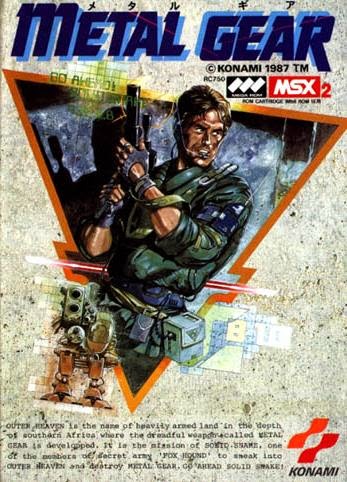
Backlog Burnout Review of Metal Gear: Solid Snake’s first mission isn’t quite so solid

System(s): MSX2, Xbox 360, Playstation 2, Playstation 3
Release Year: 1987
Rating: N/A
Current Amazon Price: $24.48 (PS3) $25.41 (Xbox 360)

The Skinny:

Metal Gear is a decent overhead stealth action game that eventually crumbles under its own weight. If you are familiar with the series and expecting more of the same, playing the title that started it all may leave you disappointed.

The Meat:

The Metal Gear franchise is a powerhouse in video games. Currently spanning 10 canonical, main series games and almost twice as many remakes or spinoffs on consoles ranging from the Gameboy to the Playstation 4, you’d be hard pressed to find a video game fan who hasn’t at least heard of Solid Snake, Big Boss, or Raiden. However, this legendary series had what could only be described as humble beginnings. So humble in fact we never even received the first two games over here in the states until quite recently. Before we get into the review proper, it’s time for a little history lesson.

Some of you readers may be thinking “hey wait a minute; I remember playing Metal Gear on my NES way back in the day.” And technically you wouldn’t be wrong. A game called Metal Gear was released on the NES in 1988. It even had the same box art as the original. However, while the original was developed by the mastermind behind the current series, Hideo Kojima, in conjunction with Konami, the NES port that we received in the United States was developed by a totally separate team called Ultra Games. The version that we received is completely different in a variety of ways, not the least of which is that it doesn’t even contain a Metal Gear! It is also widely considered to be an inferior version, by both fans and Hideo Kojima himself, who has gone on record as calling it an insult to his creation. The real Metal Gear game was released on an obscure computer console called the MSX2, and was only seen in Japan and parts of Europe.  The only ways to legitimately play Metal Gear and its sequel Metal Gear 2: Solid Snake in the United States are as extras included on Metal Gear Solid 3: Subsistence. This update of Metal Gear Solid 3: Snake Eater is available on either the Playstation 2 or as part of the Metal Gear Solid HD Collection on Xbox 360 and Playstation 3, or as part of the Metal Gear Legacy collection on Playstation 3. The version of the game that I played for this review was the version included in the HD Collection for the PS3. Now that the history lesson is over, on with the review.

Metal Gear is an overhead stealth action game that was revolutionary for its time. When this game released the concept of avoiding combat instead of seeking it out was novel and unusual. You play as Solid Snake, a member of the elite military unit FOXHOUND. A group of terrorists has reportedly gained control of a walking battle tank known as Metal Gear capable of launching nuclear missiles. You are sent by FOXHOUND’s commander Big Boss to infiltrate the terrorist’s fortress of Outer Heaven and destroy Metal Gear. You are also to rescue another FOXHOUND agent sent in before you named Gray Fox, as well as the scientist responsible for creating Metal Gear who is being held captive. While this set up may seem like typical 80s military fare, the execution and style of the game is not. Solid Snake is not your typical action hero. He’s not bulletproof, and as far as action video game protagonists go he is quite under equipped and underpowered. If you are spotted by an enemy soldier or camera, foes will pour into the room and odds are you will be quickly overwhelmed. You have no equipment or real knowledge to begin with other than your radio, which can be used to communicate with Big Boss and people you meet over the course of the game. You must slowly sneak around the fortress, rescuing prisoners and gaining information and equipment. These early parts of the game are excellent. The tension from having to sneak and the accomplishment you feel from successfully avoiding all obstacles and rescuing prisoners is extremely rewarding and exciting. However, the excellence doesn’t last. While the first half of the game is tense, exciting, and well executed stealthy fun, the back half is an exercise in frustration and all of the worst game mechanics that the late 80s and early 90s had to offer. The biggest offender is the key card system. Almost every door in Outer Heaven is locked. You must find keycards scattered throughout the base to unlock them. This in and of itself is not a bad idea. However, its execution is horrible. There are 9 different keycards to be found, and no hierarchy to their functioning. What I mean by that is key 9 does not also open doors locked by cards 1-8. It only opens doors locked by card 9. Same with all of the cards. And you can only have one equipment item equipped at a time. This leads to cycling through all 9 key cards every time you encounter a new locked door. Sometimes the room you are in will be full of poison gas or enemies. Instead of being able to wear your gas mask, which is an equipment item, you instead have to stand there, cycling through key cards while your health slowly drains, hoping you find the right one before Snake keels over. It is nothing but frustrating and adds nothing valuable to the gameplay.

The other great old-school sin that the game commits is its sheer randomness at times. Items necessary for plot progression will be hidden behind destructible walls with no indication or clue that they are there. This leads to getting stuck somewhere in the fortress, and having to backtrack through the entire base checking every wall hoping to find a hidden room. It wasn't fun in 1987, and it isn’t fun now. I'm all for a game letting you figure things out for yourself, but when there is literally no indication whatsoever of what you are supposed to do to proceed, frustration quickly supersedes any fun that may be had.

The Bottom Line:

Metal Gear simply has not aged well. Its fun core ideas of stealth gameplay and action are bogged down and buried under antiquated and frustrating mechanics. The first half of the game is excellent, but it quickly loses its luster and drops into irritation. All of the series staples are present that would later become famous, from the unusual plot twists to fourth wall breaking conversation directed directly at the player, yet it never truly becomes a game I can give a genuine recommendation for. For that, you have to wait for my review of Metal Gear 2: Solid Snake. The sins of the father are not always passed on to the son. 

Grant Nielsen

Saturday, November 8, 2014

Backlog Burnout Review of Etrian Odyssey: In a labyrinth this dangerous I would expect to find David Bowie

System(s): Nintendo DS
Release Year: 2007
Rating: Teen
Current Amazon Price: $21.50

The Skinny:
If you like extremely traditional turn based Japanese RPG (JRPG) combat, exploring, and don’t mind getting your teeth kicked in every now and then Etrian Odyssey is a must for you. Others may want to give it a pass.

The Meat:
Etrian Odyssey is an interesting beast. This Nintendo DS exclusive title from Atlus, the folks better known for the Shin Megami Tensei series, is a first person turn based dungeon crawler that cares little for the gameplay innovations of the past 20 years. From a gameplay perspective this 2007 release would not look out of place among the early 90s fare that it so clearly draws its inspiration from. The task it sets before you is simple. You are an explorer who has come to the town of Etria which is situated near a massive maze known as the Yggdrasil Labyrinth. Form a guild and explore it. What are you waiting for? Off you go! The game offers little explanation or guidance in the form of story that we have become so accustomed to in modern games. While this may seem like a criticism, it is actually one of the game’s greatest strengths. Presenting the player with this mysterious labyrinth and giving them no direction or instructions other than “go exploring” creates an interesting and unique experience. Every player will approach this task in their own way. Will you create a party of brutish thugs who rampage through the labyrinth smashing everything in your path or will you create a team of agile archers and survivalists who harvest materials and items from the labyrinth to sell for increased funds? Will you explore every floor carefully and find every hidden nook and cranny or will you rush through each layer of the labyrinth in a mad rush to uncover its deeper mysteries? The game places no pre conceived notions or requirements on you other than “go forth”.  While this task is simple and refreshing in concept, it is far from easy.

Standing in your way first and foremost is the Yggdrasil Labyrinth itself. As its name would imply it is a forested maze teeming with life. You explore the labyrinth in a first person perspective and this really allows you to realize how convoluted and twisted the pathways and locations are. Without a map you will quickly become hopelessly lost. This is where one of the more unique aspects of Etrian Odyssey comes to the fore. Most modern games would provide you with a map or have a map be filled out automatically as you explore. Etrian Odyssey would never hold your hand like that. It requires that you utilize the lower touch screen of the DS to draw your own map. While this may sound cumbersome it is in fact brilliant and enjoyable. You step into this labyrinth with no knowledge of what to expect. And then through your careful exploration of the starting areas a map of your own creation begins to take shape. You find shortcuts and secrets. The exploration becomes personal and you feel as if your guild is actually exploring an unknown realm. It gives a feeling of accomplishment and success to get to the end of a floor and see your carefully created map detailing every bit of the inhospitable maze you just traversed.

As mentioned above, the labyrinth is far from a dead place. It is filled with creatures and beasts, none of whom appreciate upstart adventurers wandering through their territory. When you inevitably bump in to these critters in random encounter battles, which happen at an extremely high rate, you enter first person turn based combat. This combat is about as traditional as it gets. Monsters are represented by nice static sprite drawings, and what battle animations can be seen are quite simple. Your options are the normal attack, skill, item, defend, escape, etc. If you've played a turn based RPG before you will be immediately at home here. However, unless you cut your teeth on old school NES RPGs of the early 90s the difficulty might catch you off guard. These monsters aren't playing around at all. Even basic battles can kick you to the game over screen faster than you can say Dragon Warrior. However, while difficult, the combat never enters the realm of unfair. With proper preparation, leveling, and strategy you will persevere and fell your foes. Once dead they will drop pieces of their bodies or materials that can be taken back to town and sold for currency to purchase items and equipment. And the more materials you sell to the shopkeeper the more equipment you can buy. Looking for a better shield? Better go find a dragon scale that you can have the shopkeeper make it from then. This almost Monster Hunter-ish aspect of the game makes hunting for a specific monster or drop meaningful and fun. While nothing in the gameplay and battle department is new or exotic, it is all executed with such precision and expertise that it never gets stale, repetitive, or boring. The developer knew what they were doing, and it can be seen and felt clearly in the end result.
Aside from the basic monsters you run into in the maze there are also the imposing FOEs. These monsters can be seen as angry looking orange or red snarls of energy in the dungeon. If they see you, they will chase you. If they catch you then you’d best hope you’re ready. These mini boss level monsters are extremely dangerous. When you first enter a floor you had best do your best to avoid them until you have done some serious leveling. This adds an aspect of cat and mouse to your exploration of the unknown. Turning a corner and seeing a FOE waiting for you leads to a terrified run hoping nothing gets in your way and that it doesn't catch you. Finding ways around these obstacles is a kind of puzzle solving in its own way. If it’s blocking your path do you let it see you and lure it out only to sneak behind it or do you wait until it leaves on its own? Is it moving in a set path or randomly? Only one way to find out.

As stated earlier the game gives you very little direction or purpose. Every now and then a member of town will ask you for a favor or the town leadership will task you with slaying a particular monster or collecting something. However, the exploration of the unknown is the true driving force of the game. As you go deeper into the labyrinth and it begins to change around you more questions arise than answers and you can feel that the answers are waiting if you can only get a bit deeper. Why is this labyrinth here? What is it? Where are these creatures coming from? The only way to find out is to play and go deeper.

The Bottom Line:
Etrian Odyssey is a supremely difficult, perfectly executed traditional JRPG firmly rooted in old school mechanics. If simple turn based combat isn’t enough for you then you may want to look elsewhere for your fun. This is not the place to go for a deep, gripping story or in depth character development. However, if the thrill of exploring the unknown and a really solid battle system coupled with an addictive mapping mechanic sounds like your cup of tea then drink up because this game is a blast for the right type of audience.

Grant Nielsen


Friday, November 7, 2014

A New Section - Welcome Our New Contributor!

Hey everyone!

Big things are happening here at Critical Nerd Levels, we have a new contributor! That's right, we have my friend Grant joining the blog for a feature he calls Backlog Burnout, An in-depth look through his video game collection, old and new. I asked Grant to introduce himself, and this is what he had to say,

"Hello my name is Grant Nielsen. I’m currently studying psychology at Washington State University. While I truly love what I study, one of my biggest passions lies elsewhere. Namely, in the realm of video games. I have been captivated by the medium since a very young age. The ability that video games have to tell an interactive story and create memorable experiences and joy is unmatched in other forms of media. Childhood days spending hours playing slappers only Goldeneye in friends’ basements or adventuring with Cloud and Tifa are some of my favorite memories. From these experiences a lifelong love with video games was born and I became a collector.

Recently, I realized that the difference between the amount of games that I have and the amount of games I have completed has been growing at a dramatic rate. I decided to rectify this situation with a little project I have named Backlog Burnout. I’ve begun attempting to play through all of the many hundreds of games I just never got around to or couldn’t find the time to work on. Whenever I finish a game I’m going to share my feelings and experiences about it with you! While some of these games will be well known titles, many of them you may never have heard of, and a few of them may even be terrible. My only goal is to give objective, modern day reviews from a gamer's perspective, and hopefully spark some interest in products that may have flown completely under your radar or are out of your normal realm of experience.

My favorite genres are RPGs and horror, so many of the games will be from these categories or variations thereof. However, my collection is vast and I am sure there will be something to interest everyone in there somewhere. Anyways, I look forward to sharing my experiences with you and hope to provide information you find enjoyable and valuable. "

As someone who loves games but never actually plays any, I welcome Grant aboard to educate and entertain. Look for his first review up soon!

Thursday, November 6, 2014

Music Review - Mystery Skulls - Forever


I've been keenly aware of up-and-coming Electro-R&B/Pop artist Mystery Skulls for several months now, having been exposed to a promo single off his debut album Forever called Number 1, which was notable for featuring both famous disco guitarist and friend to all electronic bands Nile Rodgers and R&B singer Brandy. It was a catchy, if not generic sounding upbeat R&B song with some flair. However, last week I was made aware of the rest of Mystery Skulls' album, and the fantastic animated video for the single Ghost, and now I'm convinced this album is a force to be reckoned with and needed to show it off to all of you.

Like I mentioned, Forever is the first album from Mystery Skulls, though it's brainchild Luis Dubuc has been around for awhile with different projects since the early 00's. Forever is an ambitious album and is exactly the kind of thing I really dig; slices of R&B, Pop, Disco and Soul with a predominant Electronic base and history rather than Hip-Hop oriented. While I don't think there is anything wrong with R&B traditionally being Hip-Hop or even Funk or Blues based, I was a kid raised in the electronic scenes of the late 90's and early 00's and when those influences cross-over to other genres of modern music like Electro has for the last decade or so I get more excited about the new combos more than I do the originators.

Daft Punk can easily be identified as one of Mystery Skulls biggest electronic inspirations, with some of the harder Electro and Disco based beats. One of my personal favorites on the album, Paralyzed, has a main synth riff that sounds like a combination of the secondary, end riff in Da Funk and Derezzed. One song, When I'm With You, I swear took a little synth rhythm from Eiffel 65 and if that is where he got the inspiration I would be so incredibly pleased. Dubuc has a very blue-eyed soul sound to his voice similar to the take the Black Keys take on their newest album, Turn Blue, and a cadence that places him definitely in this era and no sooner. The majority of Forever combines this voice with a particularly fun turn of phrase, some hard synth lines, crunchy basses and strong kick drums. On some songs however, Dubuc switches flavors up and tries to go more R&B or Disco-y, and strings and guitars are much more prevalent than kick drums or synths.


That flavor turn is most evident in Magic and Number 1, the two songs that prominently feature both Nile Rodgers on guitar and Brandy on vocals. Both songs, while enjoyable, I find lacking compared to the Electro-oriented Pop of the rest of the album. Rodgers has a very distinct playing style that, while very pleasing to hear, can sound very same-y, song to song, and it becomes more about what you put around that guitar that makes it different. Brandy does a great job and adds a level of credibility to the songs with her vocals, but unfortunately the lyrics on these two songs happen to be the most repetitive and least substantive. On their own, very good, comfortable songs for the genre, but on an album that has so many other high points there has to be a low point and for me these two are it.

The real star of the album is the track Ghost, which combines a really infectious Electro-beat, House-y Synths and super catchy vocals. This song is the defining track of the album. If you hear this song and like it, you'll love the album. It really embodies the main influences and directions that Dubuc is trying to accomplish with this album, and it's a sound I really, really enjoy. It doesn't hurt that a super groovy animated music video for it is currently taking the internet by storm.

I think the only other real criticism I have of the album is a nitpick, and it's the amount of swearing on this 41 minute, 11 track album. I know it sounds weird, but the amount of times Dubuc says fuck and shit in the album was a little bit of a detractor for me. While it does make him sound more of this era in his songwriting process, it to me sometimes just felt a little lazy, like he could've found something better to fill that word space in than fuck, but it really is a nitpick. I know I actually enjoy it in the song Paralyzed when Dubuc brings the song down to silence, says "fuck it" and the song breaks out into an instrumental interlude.

Overall, this is a stellar debut from Mystery Skulls and I can't wait for the vinyl release of Forever and whatever he has planned next. Oh, and stay tuned to the blog for some exciting news (hint, we have a new contributor!)


Website
Facebook
Bandcamp
Amazon
Spotify